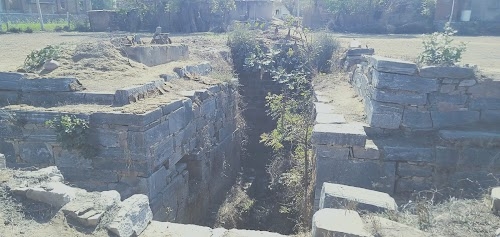
Ancient Water Source – I understand this is a traditional Indian stepwell, known locally as a 'Bawadi'. These architectural marvels were historically designed to provide access to groundwater, serving as crucial community water sources and often as places for respite and social gathering, especially in arid regions.
Historical background
Architectural Heritage – Stepwells like this one are a testament to ancient Indian engineering and artistry, often dating back centuries. They showcase intricate construction techniques, with multiple levels of steps leading down to the water, often adorned with carvings and architectural details that reflect the period of their creation.
Why people come here
Architectural Interest – People typically visit stepwells to admire their unique architecture and the ingenious methods of ancient water conservation. It's a place to appreciate historical craftsmanship, understand local heritage, and often to capture striking photographs of the geometric patterns and deep structures.
What to expect
Quiet Exploration – When you visit, I expect you'll find a relatively calm and reflective atmosphere. You'll likely descend many steps into the earth, revealing impressive stone architecture. The air often feels cooler as you go deeper, offering a unique sensory experience away from the heat above.
Key highlights
Intricate Design – The main highlights are usually the intricate stone carvings that may adorn the walls and pillars, the precise geometric patterns formed by the descending steps, and the overall sense of scale as you look down into the well. The cool, quiet ambiance at the bottom is also a distinct feature.
Practical info
Accessibility Considerations – Access to stepwells generally involves navigating numerous steps, which can be steep and uneven. I recommend wearing comfortable footwear. While specific timings may vary, these sites are typically accessible during daylight hours.
Good to know
Engineering Marvel – I find it fascinating that these structures represent an early form of sustainable water management. They are not just wells, but sophisticated underground buildings that served vital community functions, demonstrating remarkable hydraulic engineering and social planning from centuries past.