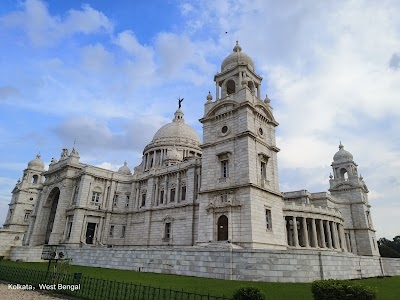
Historic Fortress – This is a prominent historical fort located on the eastern banks of the Hooghly River in Kolkata, West Bengal. It serves as an active military cantonment and the headquarters of the Eastern Command of the Indian Army.
Why people come here
Historical Significance – People are often drawn to Fort William for its deep historical roots and its formidable presence in the heart of Kolkata. It stands as a significant landmark, representing a pivotal era in the city's past. While public access is largely restricted, its historical importance makes it a point of interest.
What to expect
Restricted Access – As an active military installation, access to Fort William is highly restricted for civilians. You can generally observe parts of its impressive perimeter and the surrounding grounds from a distance. The area around it is well-maintained, reflecting its military importance.
Practical info
Limited Entry – Due to its status as a military base, there is no general public entry into Fort William. Special permissions are required for any visits, which are typically granted only for official purposes. Visitors can view the fort from outside its boundary walls and from nearby vantage points.
Good to know
City's Foundation – Fort William is named after King William III of England and was instrumental in the establishment and growth of Kolkata (then Calcutta). Its construction dates back to the late 17th and mid-18th centuries, playing a crucial role in the colonial history of India.
Historical background
Strategic Construction – The original Fort William was built by the British East India Company in 1696. After its capture and destruction in 1756, a new, much larger fort was constructed between 1758 and 1781 under the supervision of Robert Clive. This new fort was designed with an irregular octagon shape, covering a vast area.
Key highlights
Architectural Design – The fort's design is a testament to 18th-century military architecture, featuring robust walls, a complex system of bastions, and a wide moat. Though not publicly accessible, its scale and strategic location by the river are evident, highlighting its defensive purpose.