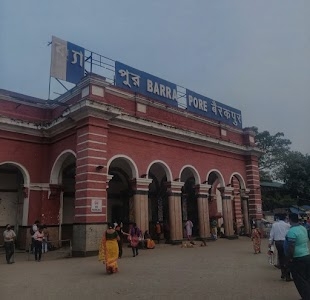
Key Thoroughfare – Barrackpore Station Road, a central and bustling artery in Barrackpore, West Bengal.
What is this place?
Local Hub – I see Barrackpore Station Road as a vital passage that connects the Barrackpore Railway Station to the wider locality. It’s more than just a road; it’s a dynamic hub of daily life, reflecting the pulse of the town.
Why people come here
Commute & Commerce – People typically use this road for commuting to and from the Barrackpore Railway Station , making it a crucial transit point. It also serves as a local commercial stretch, attracting visitors for everyday shopping, street food, and various services.
What to expect
Vibrant & Busy – Here, you can expect a vibrant and often busy atmosphere, characteristic of a major transit and market area in India. The road is generally bustling with pedestrians, local transport like auto-rickshaws and cycle-rickshaws, and street vendors, offering a glimpse into local Barrackpore life.
Main services available
Transport & Retail – Along Barrackpore Station Road, I note a range of main services. You'll find numerous shops selling everyday goods, small eateries and tea stalls, and various local transport options readily available for onward journeys. It's a convenient spot for quick purchases and accessing public transit.
Practical info
Peak Hours – This road can get particularly crowded during peak commuting hours in the mornings and evenings. Traffic can be dense, so factoring in extra travel time is generally a good idea if you're passing through during these times.
Tips for a smoother experience
Navigate Smartly – To ensure a smoother experience, I recommend being mindful of the bustling crowds and traffic, especially if you're on foot. For quick local travel, auto-rickshaws and cycle-rickshaws are commonly available here.
Good to know
Historical Context – Barrackpore itself holds significant historical importance in India, particularly related to the Sepoy Mutiny of 1857. While the road itself is primarily functional, its surroundings are steeped in history.