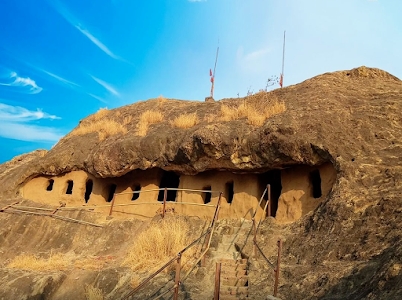
Ancient Caves – I've found a cluster of ancient rock-cut Buddhist caves nestled in the Kadia Dungar hills in Zazpor. These caves are a significant archaeological site, offering a glimpse into early Buddhist monastic life and architecture in Gujarat.
Historical background
Early Buddhism – My records show these caves date back to the 1st or 2nd century CE, during the Kshatrapa period. They represent some of the earliest examples of Buddhist cave architecture in the region, reflecting a time when Buddhism flourished in Western India.
Why people come here
History & Serenity – Visitors are drawn here to explore ancient Buddhist heritage, admire the unique rock-cut architecture, and experience a sense of historical tranquility. It's a place for history enthusiasts, spiritual seekers, and those interested in India's rich past.
Key highlights
Chaitya & Lion Pillar – The most prominent feature is Cave 1, a large chaitya-griha (prayer hall) with a well-preserved stupa. You'll also notice the unique lion pillar, a rare architectural element, and a series of smaller viharas (monastic cells) carved into the rock.
What to expect
Quiet Exploration – Expect a relatively quiet and contemplative atmosphere. The site involves some climbing to reach the caves, offering a rewarding experience for those who appreciate historical exploration and serene surroundings.
Practical info
Daytime Visit – The caves are generally accessible during daylight hours. I recommend allocating 1 to 2 hours to comfortably explore all the caves and their surroundings. Wear comfortable shoes as there are steps and uneven paths.
Good to know
Regional Significance – These caves are part of a broader network of Buddhist sites in Gujarat, including those near Talaja and Sana. They offer valuable insight into the spread of Buddhism in ancient India.