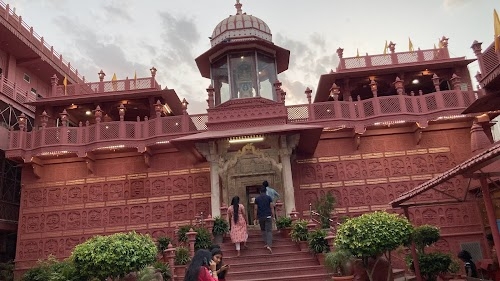
Ancient Temple – This is a renowned Digambar Jain temple, often referred to as Shri Digambar Jain Atishay Kshetra Mandir. It is celebrated for its intricate architecture and spiritual ambiance, located in the historic town of Sanganer, near Jaipur .
Why people come here
Pilgrimage & Architecture – Many visitors come here for spiritual pilgrimage, seeking peace and blessings. Others are drawn by the temple’s exquisite traditional Rajasthani and Jain architectural styles, making it a significant cultural and historical attraction in Rajasthan .
What to expect
Peaceful Serenity – You can expect a serene and contemplative atmosphere, usually with a moderate crowd of devotees and tourists. The temple complex offers a peaceful retreat, showcasing detailed carvings and a sense of ancient devotion. It's a place for quiet reflection and appreciation of art.
Spiritual or cultural significance
Sacred Heritage – This temple holds immense spiritual significance for the Digambar Jain community, believed to be an 'Atishay Kshetra' or a place of miracles. It is dedicated to Lord Rishabhanath (Adinath), the first Jain Tirthankara, and houses ancient idols, some dating back centuries. Its historical roots are deeply intertwined with Jain heritage in India.
Visitor etiquette
Respectful Conduct – When visiting, I recommend dressing modestly, covering your shoulders and knees, as is customary for religious sites. Photography rules may vary, so it's always best to check for specific guidelines upon arrival. Maintaining silence and reverence within the temple premises is highly appreciated.
Practical info
General Access – The temple is generally open from morning to evening, though specific timings can vary. It is accessible by road from Jaipur . Parking facilities are usually available nearby. The duration of a visit typically ranges from 1 to 2 hours, depending on your interest in the architecture and spiritual practices.
Good to know
Intricate Carvings – The temple is particularly famous for its multi-storied structure and the delicate carvings on its pillars and walls, which are often compared to the famous Dilwara Temples. Look out for the underground section, which is said to house some very ancient idols, opened only on special occasions.