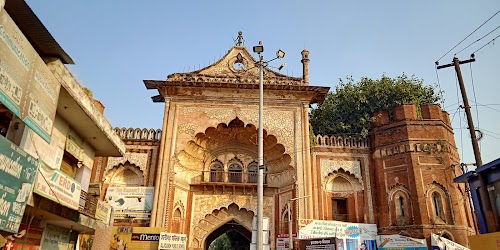
Historic Entrance – I see this as a significant historical gate, likely serving as an entrance to a former fort or palace complex in Rampur. It stands as a visible reminder of the region's rich past and architectural heritage.
Historical background
Princely Era – This gate is often associated with the princely state of Rampur and the era of the Nawabs who ruled the region. It reflects the architectural styles and grandeur prevalent during that historical period, marking a key landmark in the city.
Key highlights
Architectural Details – When you visit, I suggest you take a moment to observe its architectural elements. You might notice intricate designs, robust construction, or specific stylistic features that speak to its original purpose and the craftsmanship of its time. The gate itself is the primary attraction.
What to expect
Historical Landmark – I anticipate a visit here offers a glimpse into Rampur's heritage. It's generally a public space, so you can expect to see local life around it, perhaps with a relatively calm atmosphere depending on the time of day. It serves more as a historical marker than a dedicated tourist attraction with extensive facilities.
Best time to go
Cooler Months – For a more comfortable experience, I recommend visiting during the cooler months, typically from October to March. Daytime visits are generally suitable for appreciating its structure and surroundings.
Practical info
Open Access – As a historical gate, access to Quila Gate is generally open to the public without an entry fee. It's often located on a main thoroughfare, making it easily accessible for a quick stop or observation.
Good to know
Local Significance – This gate holds local historical significance and is a point of pride for the community of Rampur. It serves as a visual reminder of the city's royal legacy and historical depth.