
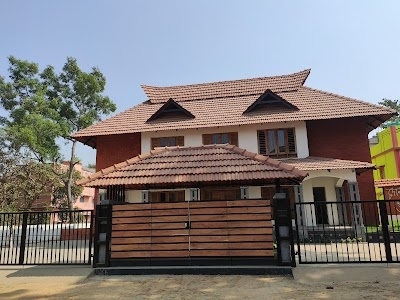



Visva-Bharati University
What is this place? – I see Visva-Bharati University as a central university and an institution of national importance. It was founded by Rabindranath Tagore, the first non-European Nobel laureate, who envisioned it as a place where the world would meet in a single nest. The university continues to uphold his ideals of holistic education and cultural exchange.
Why people come here – People typically visit here to experience its unique educational philosophy, explore its beautiful campus, and immerse themselves in the cultural and artistic heritage associated with Rabindranath Tagore. It's a place for learning, reflection, and appreciating art and nature.
What to expect – You can expect a serene and academic atmosphere, surrounded by lush greenery and distinctive architecture. The campus is spread out, offering a tranquil environment for study and contemplation. It generally suits those interested in education, art, culture, and history.
Practical info – While specific timings for all departments vary, the university campus is generally accessible during daylight hours. Exploring the campus involves a fair amount of walking, so comfortable footwear is advisable. Parking is usually available in designated areas.
Good to know – Visva-Bharati is particularly known for its annual Poush Mela, a vibrant winter festival that showcases local art, music, and culture. If you're planning a visit around that time, expect larger crowds and a festive atmosphere.
Historical background
Founding vision – Visva-Bharati began as a school in 1901 by Rabindranath Tagore at Santiniketan , evolving into a university in 1921. Tagore's vision was to create an institution that blended traditional Indian education with Western ideals, fostering a global outlook and a deep connection to nature and culture. It became a central university in 1951.Key highlights
- Uttarayan Complex – I find this complex particularly interesting as it houses several buildings where Rabindranath Tagore lived and worked, including Udayan, Konark, Shyamali, Punascha, and Udichi. You can explore his personal belongings and art.
- Kala Bhavana – This is the Institute of Fine Arts, known for its unique open-air classes and a rich collection of sculptures, frescoes, and murals by eminent artists.
- China Bhavana – Established in 1937, it's a center for Chinese studies and cultural exchange, reflecting Tagore's internationalist ideals.
- Patha Bhavana – The original school founded by Tagore, it still functions as a school with an emphasis on learning in harmony with nature.
