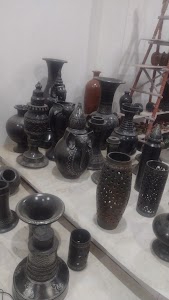
National Black Pottery industry, Nizamabad, Azamgarh
3343+88C, Nai Sarak, Masjidiya
National Black Pottery industry, Nizamabad, Azamgarh
Explurge-Ins
1
Ratings (1)
0.0
Distance
-
National Black Pottery Industry, Nizamabad
What is this place?
Craft Center – This is where the renowned black pottery of Nizamabad is traditionally crafted. It serves as a hub for artisans who continue the age-old art of making distinctive black clay pottery, a craft with deep roots in the region.
Why people come here
Art & Craft – People typically visit to witness the intricate process of black pottery making, learn about its history, and purchase authentic, handcrafted pieces directly from the artisans. It's a destination for those interested in traditional Indian crafts and unique souvenirs.
What to expect
Artisan Workshops – You can expect a vibrant atmosphere filled with the sounds of pottery wheels and the sight of skilled artisans at work. It's often an engaging experience, allowing visitors to see the various stages of pottery creation, from clay preparation to the final firing. The area showcases traditional methods passed down through generations.
Best buys
Black Pottery – The primary items to buy here are the distinctive black pottery pieces. These often include vases, decorative items, kitchenware, and intricate showpieces, all characterized by their unique black sheen and engraved silver patterns.
Bargaining and payment tips
Local Market – Bargaining is generally common here, especially when purchasing multiple items or larger pieces. While cash is often preferred, some establishments might accept digital payments. It's always a good idea to carry some cash.
Practical info
Visiting Hours – The workshops and sales points typically operate during daylight hours, generally from morning to late afternoon. It's advisable to visit during working hours to see the artisans in action. Accessibility to individual workshops can vary.
Good to know
Unique Technique – The black pottery of Nizamabad is famous for its unique firing technique, where the pots are baked in a closed kiln with rice husks, which gives them their characteristic black color. The silver-colored patterns are then etched onto the surface, making each piece a work of art. This craft has been practiced in the region for centuries.