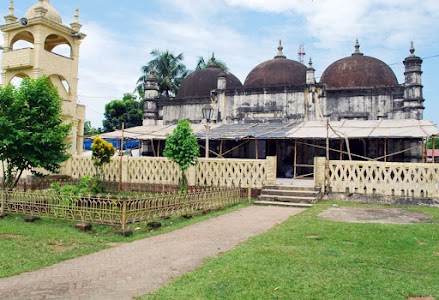
Historic Mosque – This is a revered historical mosque, often regarded as one of the oldest in Northeast India. It stands as a significant landmark reflecting early Islamic presence and architectural heritage in the state of Assam .
Spiritual and Cultural Significance
Ancient Heritage – The Panbari Nababi Moszid holds deep spiritual and cultural value, believed by many to be the first mosque established in Assam . Its origins are often linked to the 15th-16th centuries, with some traditions crediting its construction to an Arab general, Ghiyasuddin Auliya, or during the reign of Alauddin Hussain Shah of Bengal. It represents centuries of religious devotion and historical continuity.
Why People Come Here
Pilgrimage & History – Visitors typically come here for a blend of reasons: as a place of worship, for its profound historical significance, and to admire its unique architectural style. It's a pilgrimage site for many, while others are drawn by its ancient charm and tranquil atmosphere.
What to Expect
Serene Atmosphere – Here, I find a remarkably peaceful and reverent atmosphere. The mosque's architecture is simple yet distinctive, showcasing pre-Mughal design elements. It's not typically crowded, allowing for quiet contemplation and appreciation of its historical depth.
Visitor Etiquette
Respectful Conduct – As a religious site, visitors are expected to observe modest dress, covering shoulders and knees. It is customary to remove shoes before entering the prayer hall. Maintaining a quiet and respectful demeanor is appreciated to preserve the sanctity of the place.
Practical Info
Accessible Location – The mosque is conveniently located on NH 31, making it relatively easy to access by road in the Dhubri district . It is generally open during daylight hours for visitors and worshippers. There is typically no official entry fee, but donations are welcome.
Good to Know
Architectural Insight – This mosque is a rare example of pre-Mughal architecture in Northeast India. Its construction materials and design provide a glimpse into the building techniques and aesthetic preferences of that era, making it a point of interest for history and architecture enthusiasts.