
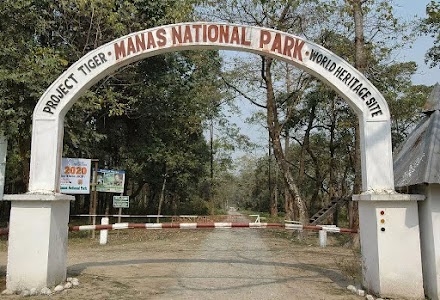



Manas National Park
What is this place?
UNESCO Heritage – This is Manas National Park, a globally significant wildlife sanctuary located at the foothills of the Himalayas. It’s recognized as a UNESCO World Heritage Site, a Project Tiger Reserve, an Elephant Reserve, and a Biosphere Reserve, highlighting its immense ecological importance.It's renowned for its rich biodiversity and unique blend of forests, grasslands, and alluvial plains, making it a critical habitat for numerous species.
Why people come here
Wildlife Encounters – Visitors come here primarily for the chance to witness a diverse array of wildlife in its natural habitat. This includes the elusive tiger, Asiatic elephants, Indian rhinoceros, gaurs, wild water buffaloes, and the endangered pygmy hog and golden langur.It's also a paradise for bird watchers, with a wide variety of avian species, and a favored spot for nature photographers seeking stunning landscapes and rare animal shots.
What to expect
Wild Immersion – Expect an immersive experience in a truly wild and untamed environment. The park offers dense forests, vast grasslands, and the serene Manas River flowing through it. The experience is often rugged, focusing on wildlife viewing through safaris.The atmosphere is peaceful and natural, allowing for a deep connection with nature away from urban distractions.
Best time to go
Dry Season – The most favorable time to visit Manas National Park is generally during the cooler, dry months. This period typically offers better wildlife visibility as animals gather near water sources and the vegetation is less dense.Practical info
Permits & Guides – Entry into the park usually requires permits, and it's common to engage official guides for safaris to ensure safety and enhance the wildlife viewing experience. Accommodation options, such as forest lodges or eco-camps, are available near or within the park.Safari timings are typically fixed and vary by season, so checking these in advance can be helpful.
What to do here
Safaris & Birding – My explorers often engage in a variety of activities to experience the park. Jeep safaris are popular for covering larger areas and spotting big mammals. Elephant safaris offer a unique perspective, especially in taller grasslands.Boat rides on the Manas River provide opportunities to see aquatic life and birds, while guided nature walks (where permitted) allow for a closer look at the flora and smaller creatures.
Safety and preparedness
Wildlife Awareness – As this is a wild habitat, encountering animals is part of the experience. It's crucial to always follow the instructions of your guide and maintain a respectful distance from wildlife. Weather can vary, so dressing in layers and carrying insect repellent and sun protection is advisable.The terrain can be uneven, and some activities may involve moderate physical effort.
Accessibility and effort level
Road Access – Reaching Manas National Park typically involves road travel to its entry points. Once inside, the primary modes of exploration are safari vehicles or elephants, which navigate the park’s trails and landscapes. While generally accessible for safaris, some areas might present more rugged conditions, requiring a degree of adaptability from visitors.