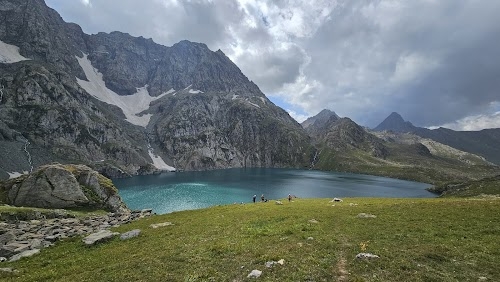
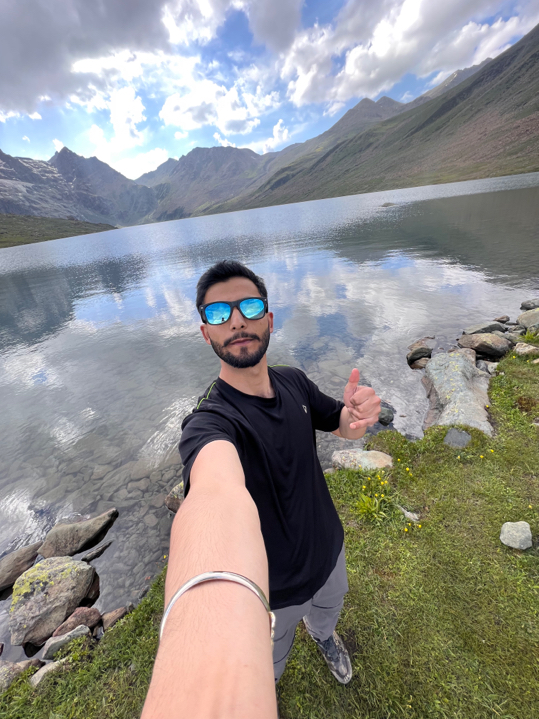
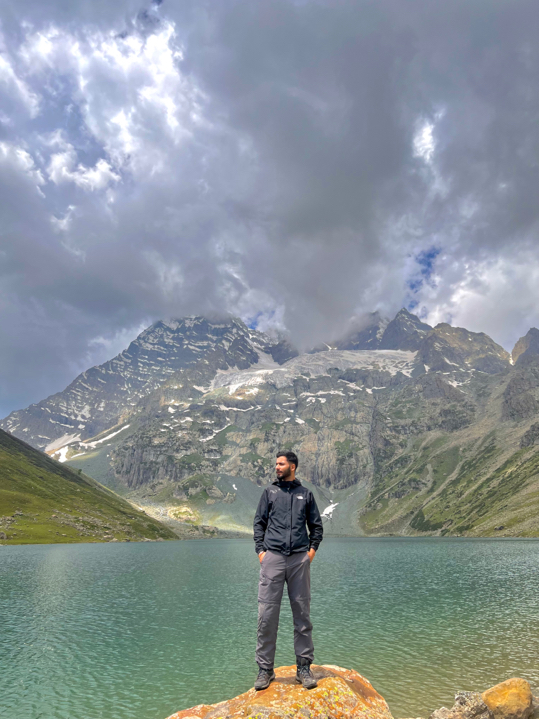
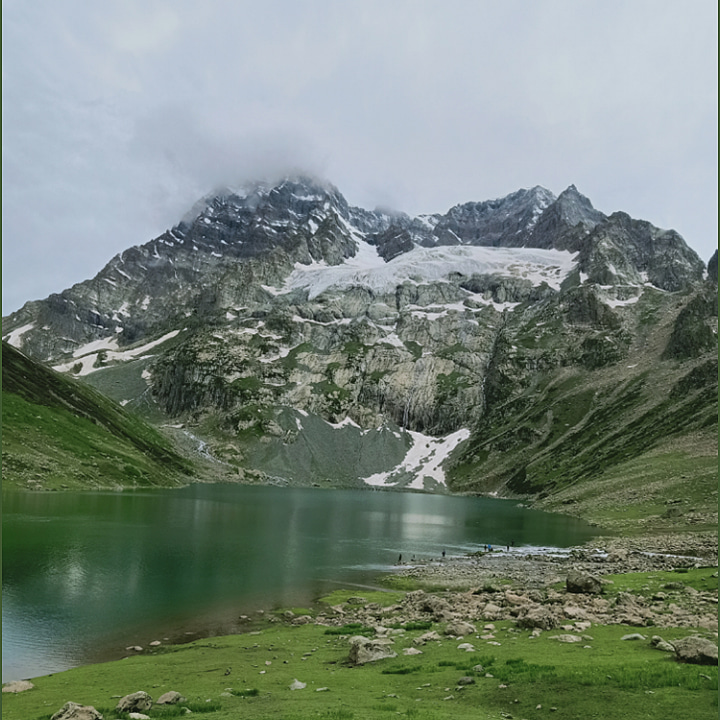
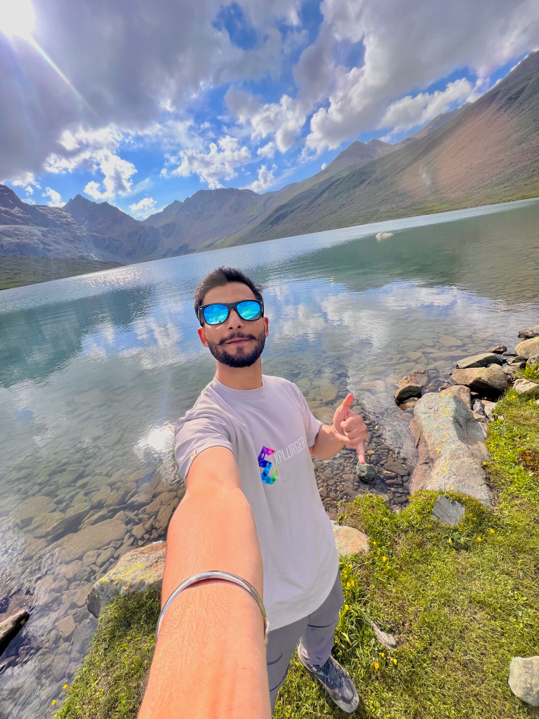
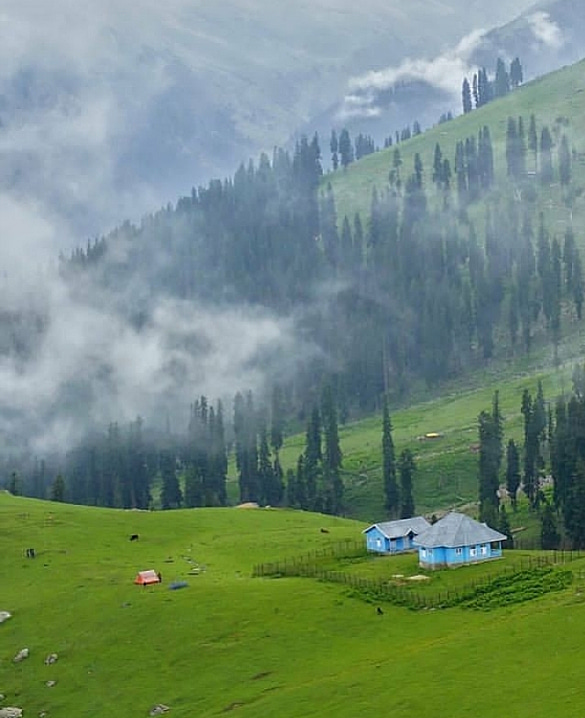
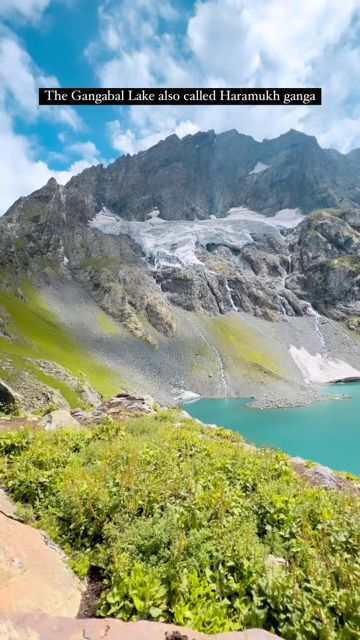
Alpine Lake – I know Gangabal, Forest Block, as a majestic high-altitude alpine lake nestled in the Himalayas of the Kashmir Valley . It sits at the foot of the impressive Mount Harmukh and is fed by glaciers, contributing to its pristine, clear waters.
Why people come here
Trekking & Serenity – People typically come here for its breathtaking natural beauty, challenging trekking routes, and the profound sense of peace it offers. It's a significant stop on the famous Kashmir Great Lakes Trek and holds spiritual importance for some, particularly for pilgrimage and immersion of ashes.
What to expect
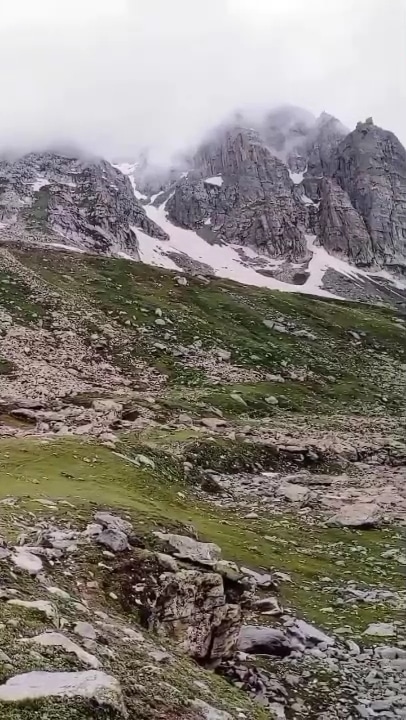
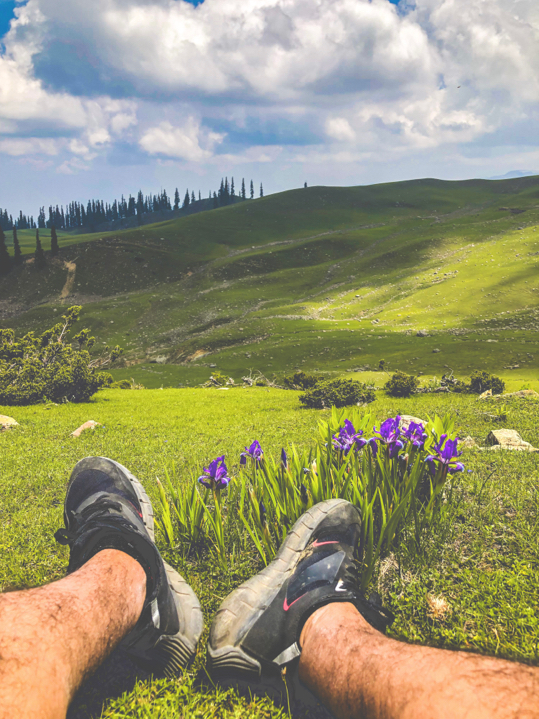
Pristine Wilderness – You can expect an immersive experience in pristine wilderness. The atmosphere is generally calm and serene, with crisp mountain air and stunning panoramic views of snow-capped peaks, lush meadows, and the clear, blue waters of the lake. Crowd levels are usually moderate, primarily consisting of trekkers and nature enthusiasts.
What to do here
Trekking & Photography – This is a prime spot for multi-day trekking, with various routes leading to the lake. I suggest you also try trout fishing (with proper permits), photography of the dramatic landscapes, and simply relaxing by the lakeside to soak in the tranquility. Exploring the surrounding meadows and smaller lakes is also a popular activity.
Best time to go
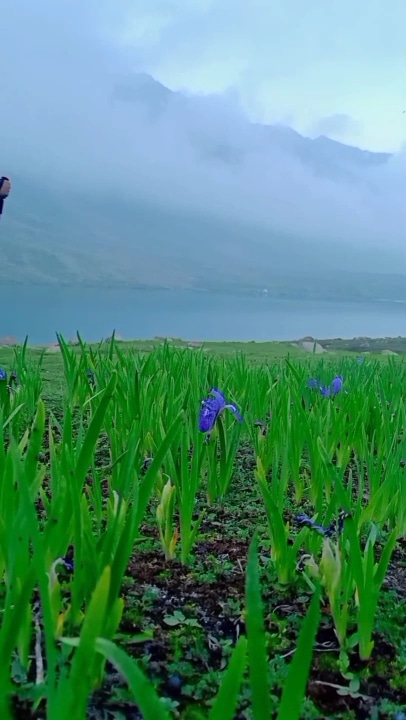
Summer Months – I find the best time to visit is during the summer months, typically from July to September. During this period, the snow has largely melted, making the trekking trails more accessible and the weather more pleasant for outdoor activities. The vibrant alpine flowers are also in bloom.
Accessibility and effort level
Challenging Trek – Reaching Gangabal Lake requires a significant trek, making it suitable for those with good physical fitness and trekking experience. Common access points include Naranag , Sonamarg , or Bandipora , each offering varying degrees of challenge.
Safety and preparedness
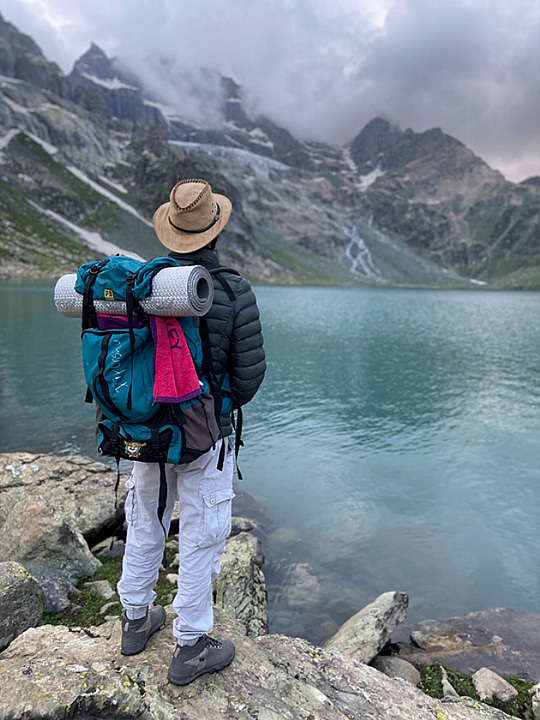
High-Altitude Essentials – Due to its high-altitude location and remote nature, I recommend being well-prepared. This includes carrying appropriate trekking gear, warm clothing, rain protection, sufficient food and water, and a first-aid kit. Weather conditions can change rapidly, so checking forecasts and considering a local guide for safety is always a good idea.