
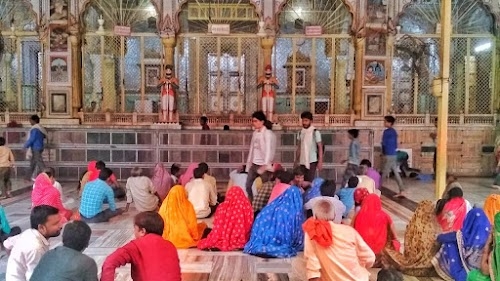



Shri Madan Mohan Ji Temple
What is this place? – This is a revered Hindu temple dedicated to Lord Krishna, specifically in his form as Madan Mohan. It's a significant pilgrimage site for devotees, particularly those following the Gaudiya Vaishnavism tradition.
Why people come here – People primarily visit this temple for worship, to offer prayers, and to seek blessings from Lord Krishna. It's also a place for spiritual solace and to experience the rich devotional atmosphere.
What to expect – You can expect a serene and spiritual environment, often filled with the sounds of devotional songs (bhajans) and prayers. The temple complex is typically active with devotees, especially during festivals. It's a place for quiet reflection and participation in religious rituals.
Spiritual or cultural significance
Religious importance – The Shri Madan Mohan Ji Temple holds immense religious importance as one of the seven principal temples of Thakur Ji (Lord Krishna) of the Gaudiya Vaishnava sect. It is believed that the original idol of Madan Mohan was brought here from Vrindavan and has a rich history connected to prominent saints and rulers.
Visitor etiquette
Respectful conduct – When visiting, it's important to dress modestly, covering your shoulders and knees. Photography rules may vary, so it's best to observe signs or ask. Maintaining silence or speaking softly is appreciated, especially within the main temple area, to preserve the peaceful atmosphere for devotees.
Practical info
General guidance – The temple is generally open for darshan (viewing of the deity) during specific morning and evening hours, which can vary. It's advisable to check local timings. While there might be facilities for shoe storage and donations, specific accessibility information can vary. Parking is usually available nearby but might require a short walk.
Good to know
Historical connection – The temple is not just a place of worship but also a site with significant historical connections, reflecting the architectural and religious traditions of its era. It's a key part of the spiritual landscape of Karauli, Rajasthan.
