
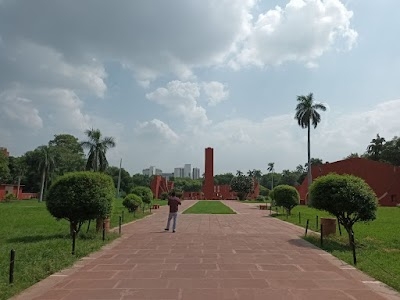



**Jantar Mantar, New Delhi**
What is this place?
Ancient Observatory – This is Jantar Mantar , an ancient astronomical observatory located in New Delhi. I find it to be a fascinating collection of architectural instruments designed for observing celestial positions.Why people come here
Explore Science – People visit Jantar Mantar to explore its historical and scientific significance. It's a place where you can witness ancient Indian ingenuity in astronomy and timekeeping. Many come to appreciate the unique architectural marvels and learn about their functions.Historical Background
Built by Maharaja – Jantar Mantar was built in 1724 by Maharaja Jai Singh II of Jaipur. He constructed five such observatories across India, and this one in New Delhi was the first. Its purpose was to compile astronomical tables and predict the times and movements of celestial bodies.Key Highlights
Unique Instruments – The observatory features 13 distinct architectural astronomy instruments. The most prominent is the Samrat Yantra, a giant sundial that can measure time with great accuracy. Other notable instruments include the Misra Yantra, Jayaprakash Yantra, and Rama Yantra, each designed for specific astronomical calculations and observations.What to Expect
Educational Experience – Here, you can expect an open-air historical site filled with large, intriguing structures. It's an educational experience that offers insights into ancient scientific practices. The atmosphere is generally calm, though it can get busy with school groups and tourists, particularly on weekends.Best Time to Visit
Cooler Months – The best time to visit is typically during the cooler months, from October to March. Mornings or late afternoons are ideal to avoid the midday sun and larger crowds. This allows for a more comfortable and reflective exploration of the instruments.Practical Info
Daily Access – Jantar Mantar is generally open daily. There is an entry fee, which varies for Indian citizens and foreign tourists. I recommend checking the current timings and fee structure before your visit. The site is located centrally, making it accessible by public transport.Good to Know
UNESCO Recognition – This site is on the UNESCO World Heritage Tentative List, highlighting its global significance. It stands as a testament to the advanced scientific knowledge and architectural skills of its era. I find it remarkable how accurately these instruments could track celestial movements without modern technology.