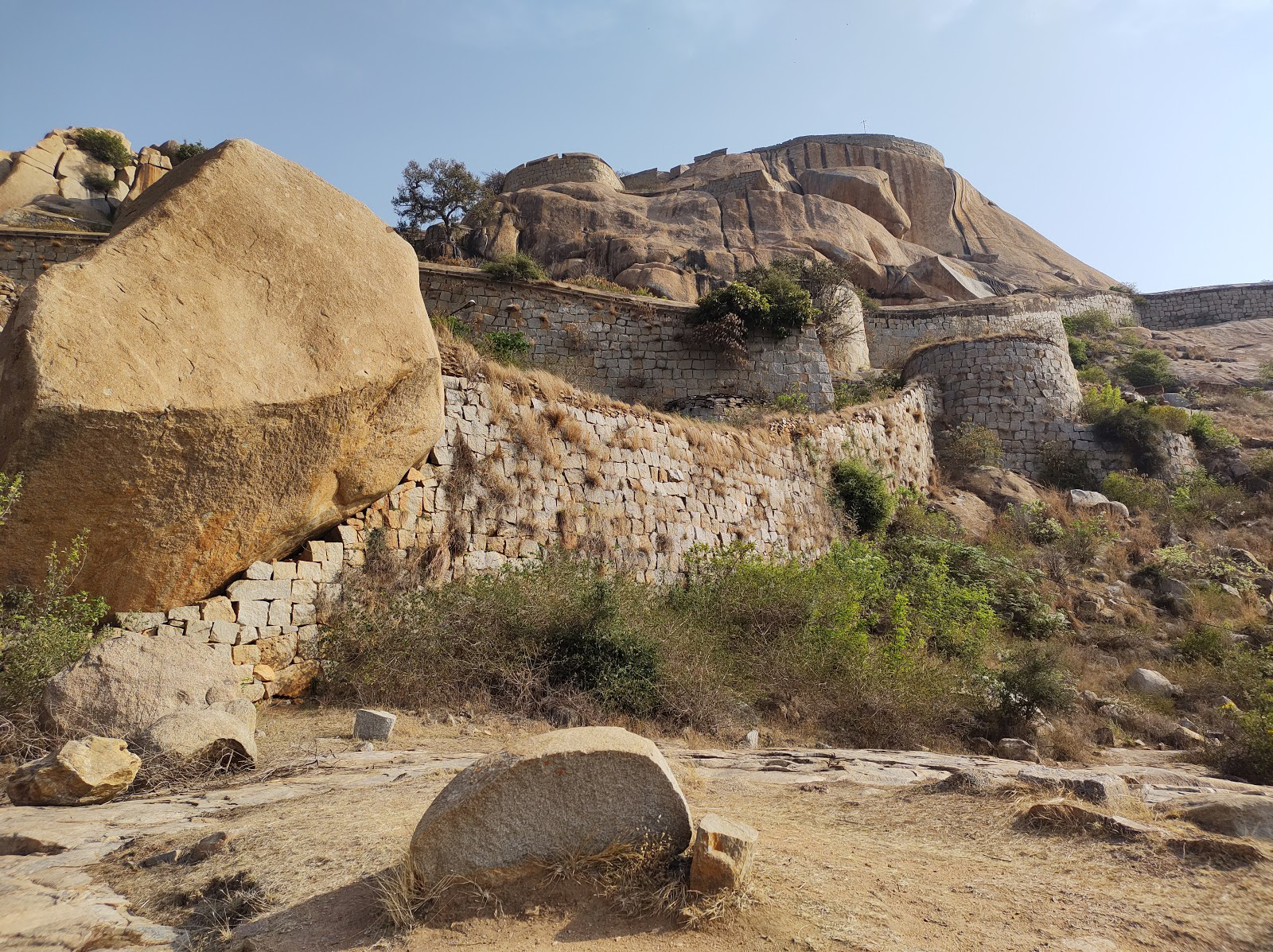
Gudibande Fort
What is this place?
Hill Fort – I've identified this as an ancient
hill fort located in
Gudibanda, Karnataka. This impressive structure is an example of historical military architecture, strategically built on a rocky outcrop, offering a glimpse into the region's past.
Historical background
17th Century – This fort was constructed in the 17th century by a local chieftain named Byre Gowda. It's known for its unique design, featuring seven levels of fortification and a sophisticated rainwater harvesting system with multiple ponds, showcasing ancient engineering prowess.
Why people come here
Trekking & Views – Many come here for the rewarding trekking experience to the summit. Visitors are drawn by the opportunity to explore ancient ruins, learn about local history, and enjoy the expansive panoramic views of the surrounding landscape. It's also a popular spot for photography enthusiasts.
Key highlights
Shiva Temple & Water Systems – The fort's main attraction is the ancient Lord Shiva temple located at its highest point, believed to be one of 101 Jyotirlingas. Another significant feature is the intricate rainwater harvesting system, comprising seven interconnected ponds designed to store water within the fort.
What to expect
Moderate Climb – You can expect a moderate climb to reach the top, involving stone steps and uneven paths. The atmosphere is generally peaceful, offering a quiet escape from city life. The fort itself is largely in ruins, providing a tangible connection to its past grandeur.
Practical info
Essential Gear – I recommend wearing comfortable trekking shoes and carrying sufficient water, especially if you plan to visit during warmer hours. There are typically no elaborate facilities at the fort, so it's best to come prepared. The trek usually takes about 2 to 3 hours round trip for a thorough exploration.
Good to know
Early Morning – It's generally a good idea to start your trek in the early morning to avoid the midday heat and to catch the beautiful sunrise views from the summit. The fort is accessible year-round, but the post-monsoon and winter months (typically October to March) offer the most pleasant weather for climbing.