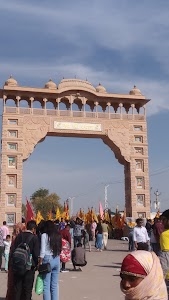
Ancient Temple – This is the revered Khatu Shyam Ji Temple, a prominent Hindu pilgrimage site dedicated to Barbarika, a grandson of Bhima from the Mahabharata. He is worshipped here as Khatu Shyam Ji, making it a significant spiritual destination in Rajasthan.
Why people come here
Devotion & Blessings – Devotees primarily visit to offer prayers and seek blessings from Khatu Shyam Ji, who is believed to fulfill wishes. Many come to express gratitude, participate in religious ceremonies, or simply experience the profound spiritual atmosphere.
What to expect
Pilgrimage Experience – Here, you can expect a vibrant and devotional atmosphere, often with large crowds, particularly during festivals and auspicious days. The temple complex is well-maintained, offering a deeply spiritual journey for visitors.
Spiritual or cultural significance
Divine Head – Khatu Shyam Ji is revered as the deity of Kalyug (the present age). The temple houses his divine head, which, according to legend, was found in the Khatu village. His story emphasizes sacrifice and devotion, making it a highly sacred site for followers, especially from Rajasthan and Haryana.
Best time to go
Cooler Months – I recommend visiting during the cooler months from October to March for the most comfortable experience. It's best to avoid the intense heat of the summer. Weekdays are typically less crowded than weekends and major festival periods.
Practical info
Visiting Details – The temple generally opens early in the morning and closes late in the evening, often with a midday break; exact darshan (viewing of the deity) timings can vary, especially during major festivals. Modest dress is advised. You'll find facilities like shoe-keeping services, prasad (offerings) stalls, and washrooms. Photography might be restricted in certain areas, particularly inside the sanctum sanctorum, and removing footwear before entering the main temple premises is customary.
Good to know
Lakh Data – Khatu Shyam Ji is also known by several other names, including 'Lakha Data' (giver of millions) and 'Teen Baan Dhari' (bearer of three arrows), reflecting his benevolent nature and prowess. The journey to the temple is often part of a larger pilgrimage circuit in Rajasthan.