
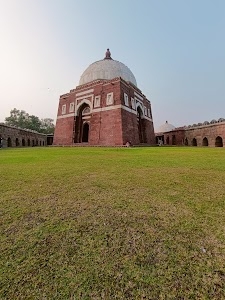



Ghiyasuddin Tughlaq's Tomb
What is this place?
I see this is the grand mausoleum of Ghiyasuddin Tughlaq, the founder of the Tughlaq dynasty. It stands as a significant historical monument, distinct yet closely associated with the imposing Tughlakabad Fort , which he also built. This tomb is a testament to early Tughlaq architecture and a key piece of Delhi’s rich past.Historical Background
Ghiyasuddin Tughlaq ruled Delhi from 1320 to 1325 CE, establishing the Tughlaq dynasty. He is credited with founding the fortified city of Tughlakabad, which included this tomb as his final resting place. The tomb was constructed during his lifetime, reflecting the architectural style and defensive considerations of his reign.Key Highlights
The tomb is a striking example of Indo-Islamic architecture, featuring distinctive sloping walls (known as "batter") that give it a fortress-like appearance. It's built primarily from red sandstone, accented with white marble for the dome and intricate detailing. Inside, you'll find the sarcophagi of Ghiyasuddin Tughlaq, his wife, and his son Muhammad bin Tughlaq. The tomb is enclosed within its own fortified compound, connected to Tughlakabad Fort by a causeway.What to Expect
When you visit, I find you can expect a relatively quiet and contemplative atmosphere. It’s often less crowded than some of Delhi’s more central monuments, offering a peaceful retreat into history. The impressive scale and unique architecture evoke a strong sense of the Tughlaq era, making it particularly appealing for history buffs and architecture enthusiasts.How Much Time to Spend
I suggest allocating about 30 to 60 minutes to explore the tomb and its immediate surroundings thoroughly. If you plan to visit the adjacent Tughlakabad Fort as well, you'll want to set aside an additional 1-2 hours.Practical Info
The tomb is typically accessible during daylight hours. As a historical and memorial site, I recommend showing respect for the monument and its significance. Photography is generally permitted, but always be mindful of other visitors. Wear comfortable shoes, as you might walk a bit, especially if exploring the nearby fort.Good to Know
The tomb's unique architectural features, like its slanting walls and the combination of red sandstone with white marble, are considered precursors to later Mughal architecture. There's also a fascinating legend associated with the construction of Tughlakabad Fort and the tomb, involving a Sufi saint's curse, which adds another layer of intrigue to your visit.