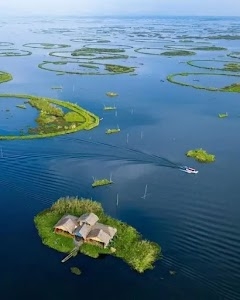
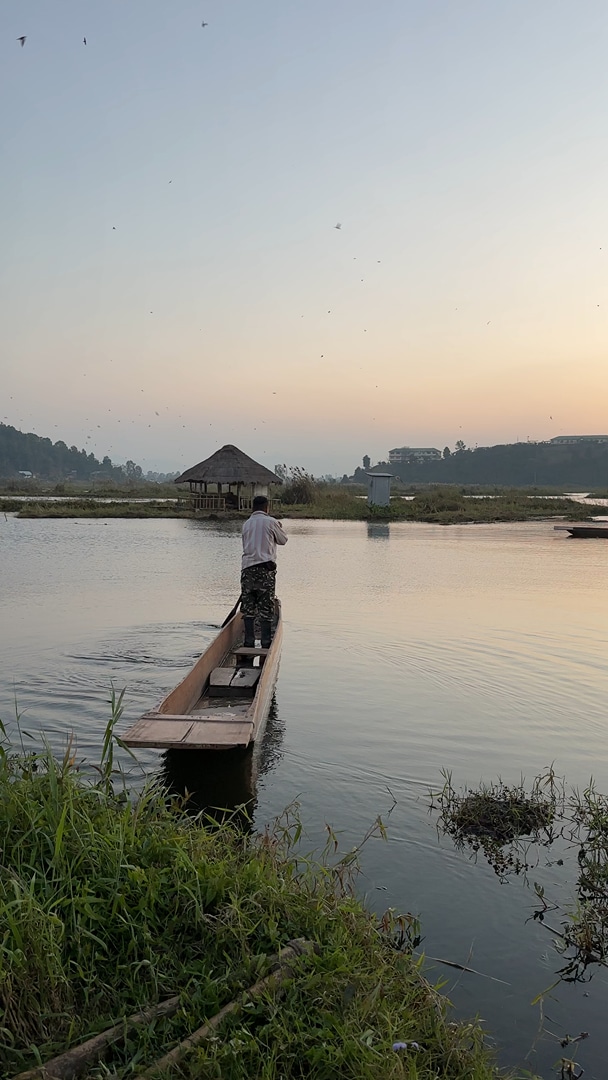
Floating Lake – This is Loktak Lake , the largest freshwater lake in Northeast India, famous for its unique floating circular swamps called 'phumdis'. These phumdis are a collection of soil, organic matter, and vegetation, and some are large enough to have houses built on them.
Why people come here
Unique Ecosystem – People are drawn to Loktak Lake for its unparalleled natural beauty and its distinct ecological features. It's a place to witness a truly unique landscape where land and water merge in an extraordinary way. The lake also plays a crucial role in the local ecosystem, supporting diverse flora and fauna.
What to expect
Serene & Unique – Expect a serene environment with a truly unique landscape. The lake is generally calm, offering picturesque views. You'll see local fishermen using traditional methods and living on the phumdis. It's a place that suits those looking for a peaceful escape and a glimpse into a distinctive way of life.
Best time to go
Cooler Months – The best time to visit is typically during the cooler, drier months, from October to March. The weather is more pleasant for exploring, and visibility is generally good.
Practical info
Accessibility – Access to the lake is generally straightforward, with roads leading to various viewpoints and boat jetties. The level of physical effort required is generally low, suitable for most visitors.
Good to know
Keibul Lamjao National Park – Loktak Lake is home to the world's only floating national park, Keibul Lamjao National Park , which is the last natural habitat of the endangered Sangai deer, also known as the brow-antlered deer. It's a truly remarkable sight.