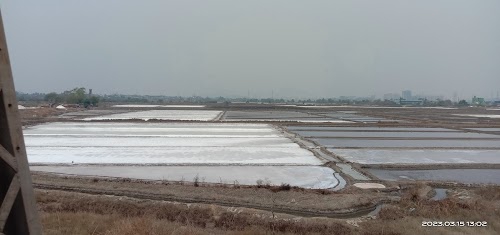
Industrial Landscape – This is a vast area where salt is traditionally harvested from seawater through evaporation. It’s an active industrial site that has also become known for its unique landscape and birdlife.
Why people come here
Birdwatching and Photography – People primarily visit the Vasai Salt Pan for birdwatching, especially during the migratory season. The expansive, flat landscape and the presence of various water birds also make it a popular spot for photography, offering unique backdrops and opportunities to capture wildlife.
What to expect
Open and Serene – I find the Vasai Salt Pan to be an open and generally serene environment, far from the city's hustle. You can expect vast, flat stretches of land with shallow water bodies, especially during the salt production season. The atmosphere is typically calm, offering a sense of quietude, though it can get windy. It primarily attracts nature enthusiasts, birdwatchers, and photographers.
Best time to go
Winter Months – The best time to visit is typically during the winter months, from November to March. This period coincides with the migratory bird season, offering the best chances for birdwatching. The weather is also cooler and more pleasant for exploration. Early mornings or late afternoons are ideal for photography and bird sightings.
Practical info
Open Access – The salt pans are generally open access, but it’s an active industrial area, so exercising caution and respecting the work being done is important. There are typically no formal facilities like washrooms or dedicated parking, so visitors should plan accordingly. Accessibility is generally easy by road, with some unpaved tracks leading closer to the pans.
Good to know
Footwear and Hydration – I recommend wearing comfortable, closed-toe footwear as the terrain can be uneven and sometimes muddy. Carrying water and snacks is also advisable, as there are no shops or vendors directly at the salt pans. Remember to bring binoculars for birdwatching and a good camera for photography.