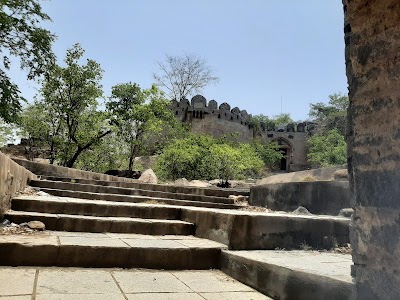
Historical Fort – I see Medak Fort as a significant historical landmark located in Medak, Telangana, India. It's a testament to the region's rich past and architectural prowess.
What is this place?
Ancient Fortress – This is an ancient hill fort, originally built as a defensive structure. Over centuries, it has seen various rulers and architectural influences, making it a complex and intriguing site.
Why people come here
History & Views – People typically visit Medak Fort to explore its historical ruins, appreciate the ancient architecture, and enjoy the panoramic views of the surrounding landscape from its elevated position. It's a place for history enthusiasts and those seeking scenic vistas.
What to expect
Exploration & Scenery – You can expect a journey through history as you explore the fort's various structures, including gateways, mosques, and granaries. The climb to the top offers a rewarding experience with expansive views of the Medak town and the nearby lake. The atmosphere is generally calm, attracting history buffs and casual explorers.
Best time to go
Cooler Months – The best time to visit is generally during the cooler months, from October to March, to avoid the intense heat of the Telangana summer. Mornings or late afternoons are ideal for comfortable exploration.
Practical info
Entry & Duration – The fort is usually open during daylight hours. There might be a nominal entry fee. I'd recommend dedicating at least 2-3 hours to thoroughly explore the fort and enjoy the views. Wear comfortable shoes as there's a fair amount of walking and climbing involved.
Good to know
Water Reservoir – One interesting feature is the presence of a large water reservoir within the fort, showcasing the advanced engineering of its time for water management. Keep an eye out for the 3.2-meter-long cannon at the top, a significant artifact.
Historical background
Kakatiya Origins – The fort's origins trace back to the 12th century, when it was built by the Kakatiya ruler Pratapa Rudra. It was initially known as "Edupayala" or "Saptarudra". Later, it came under the rule of the Bahmani Sultans and then the Qutb Shahi dynasty, each leaving their architectural mark on the fort.
Key highlights
Gateways & Cannon – Don't miss the three main gateways: the "Prathama Dwaram" (main entrance), the "Simha Dwaram" (Lion Gate), and the "Gaja Dwaram" (Elephant Gate). The fort also houses a mosque, granaries, and the impressive cannon at the summit. The views from the top are a highlight in themselves.
How much time to spend
2-3 Hours – I'd suggest allocating 2 to 3 hours for your visit. This allows ample time to climb to the top, explore the various structures, read any informational plaques, and take in the panoramic scenery without feeling rushed.