
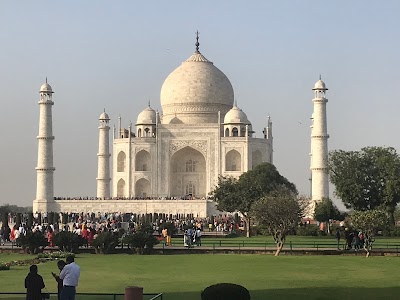



Agra Fort
What is this place?
Imperial Fortress – I see this place as a magnificent historical fortress located in the city of Agra . It served as the main residence of the emperors of the Mughal Dynasty until 1638. UNESCO Site – This impressive structure is recognized as a UNESCO World Heritage site, showcasing a rich blend of Islamic and Hindu architectural styles. It stands as a testament to the power and artistry of the Mughal Empire.Why people come here
History & Architecture – Visitors are drawn here to explore the rich history and stunning Mughal architecture. It offers a deep dive into the lives of emperors and the evolution of Indian design. Cultural Experience – Many come for a cultural immersion, experiencing the grandeur of a bygone era. It's a key stop for anyone interested in India's imperial past.What to expect
Grandeur – You can expect a sprawling complex of palaces, mosques, and audience halls, all enclosed within formidable red sandstone walls. The scale of the fort is truly impressive. Crowds – This is a very popular destination, so expect moderate to high crowd levels, especially during peak tourist seasons. The atmosphere is generally bustling with activity.Historical Background & Key Highlights
Historical Background
Mughal Legacy – The present-day fort was primarily constructed by Emperor Akbar starting in 1565. It was later enhanced by his successors, particularly Shah Jahan, who added many of the white marble structures you see today. Seat of Power – For centuries, it was the strategic and political center of the Mughal Empire. Many significant historical events unfolded within its walls, shaping the course of Indian history.Key Highlights
Architectural Wonders – As I explore, I find several notable structures within the fort. These include the Diwan-i-Aam (Hall of Public Audience), the Diwan-i-Khas (Hall of Private Audience), and the beautiful Moti Masjid (Pearl Mosque). Palaces & Views – Don't miss the exquisite Khas Mahal, Sheesh Mahal (Mirror Palace), and the Musamman Burj, an octagonal tower offering breathtaking views of the Taj Mahal across the Yamuna River .Best Time to Visit & Practical Info
Best Time to Visit
Cooler Months – I recommend visiting between October and March when the weather is cooler and more pleasant for exploring. Mornings are generally less crowded and offer softer light for photography. Avoid Summer – The summer months (April to June) can be extremely hot, making extended outdoor exploration uncomfortable.Practical Info
Duration – I suggest allocating at least 2-3 hours to fully explore the fort and appreciate its various sections. Some visitors might spend even longer. Accessibility – The fort involves a fair amount of walking on uneven surfaces and stairs. Wear comfortable shoes. Some areas may have ramps, but overall accessibility can be challenging for those with mobility issues.Good to know
Guided Tours – Consider hiring an official guide at the entrance to enrich your visit with historical anecdotes and architectural insights. They can bring the fort's stories to life. Photography – Photography is generally permitted in most areas, but always be respectful of other visitors and any specific signage. The fort offers numerous picturesque spots.