
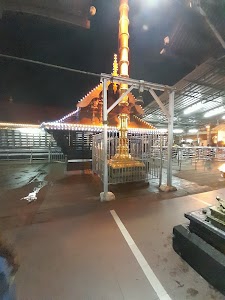



Chottanikkara Temple
What is this place? – I see this is a prominent Hindu temple dedicated to the goddess Bhagavati. It's a significant pilgrimage site in Kerala
Spiritual or cultural significance – This temple holds immense spiritual importance, especially among followers of the Shaktism tradition. The main deity, Chottanikkara Amma, is revered in three forms: as Saraswati in the morning, Bhadrakali at noon, and Durga in the evening. The temple is famous for its 'Guruthi Pooja', a ritual performed to invoke the goddess's blessings.
What to expect – You can expect a devout and serene atmosphere, though it can get very crowded, especially during festivals and auspicious days. The temple complex is traditional, with distinct architectural styles. Be prepared for queues, especially if you plan to participate in specific rituals.
Visitor etiquette – Respectful attire is essential; men typically wear a 'dhoti' (mundu) and no shirt, while women wear sarees or traditional Indian wear. Photography inside the sanctum is usually restricted. Maintaining silence and reverence is expected. There are specific rituals and offerings, and it's good to observe local customs.
Best time to go – The early mornings are generally less crowded and offer a more peaceful experience. If you wish to witness specific rituals, checking the temple's daily schedule is advisable. The festival season, particularly the Annual Festival in February/March, attracts large crowds.
Practical info – The temple generally opens early in the morning and closes late in the evening, with specific timings for different poojas and darshans. There are facilities for shoe storage and areas to wash hands and feet before entering. Parking can be challenging during peak times, so consider public transport or taxis.
Good to know – The temple has two main deities: the 'Onakkuttichathan' (Bhagavathy) in the main shrine and the 'Keezhkavu Bhagavathy' in a separate shrine, which is particularly associated with healing mental illnesses. Many devotees perform a ritual at the Keezhkavu shrine after visiting the main temple.
