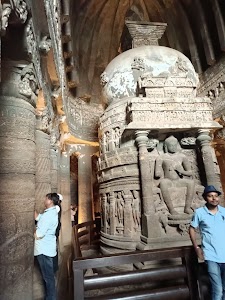
Ancient Buddhist Art – This is a remarkable collection of approximately 30 rock-cut Buddhist cave monuments, dating from the 2nd century BCE to about 480 CE. These caves served as monasteries and worship halls for Buddhist monks for centuries, excavated in two distinct phases: the earlier Hinayana phase (2nd century BCE to 1st century CE) and the later Mahayana phase (5th to 6th century CE). After the 7th century, the site was abandoned and remained hidden until its rediscovery in 1819. The Ajanta Caves are a UNESCO World Heritage Site, recognized for their outstanding universal value as masterpieces of Buddhist religious art and architecture.
Key Highlights
Murals & Sculptures – As you explore, focus on the detailed murals in caves 1, 2, 16, 17, and 19, which showcase vibrant frescoes and tempera paintings depicting the Jataka tales (stories of the Buddha's previous lives). These paintings use natural pigments and illustrate a significant period of Buddhist art. Also, look for the magnificent reclining Buddha sculpture in Cave 26 and the intricate carvings and stupas within the chaitya (prayer) halls and vihara (monastery) caves.
Visitor Experience & Appeal
Awe-Inspiring Journey – People primarily visit to witness the extraordinary ancient Indian art and architecture. You can expect to be mesmerized by the sheer scale and artistry of these ancient caves. The atmosphere is generally one of quiet contemplation, offering a profound journey into India's rich spiritual and artistic past. While it can get busy with visitors, especially during peak season, the overall experience is deeply enriching.
Planning Your Visit
Cooler Months & Half Day – I recommend visiting during the cooler, dry months from October to March, as the weather is more pleasant for exploration. Avoid the monsoon season (June to September) and the hot summer months (April to May). To properly appreciate the art and history, I suggest allocating at least 3 to 4 hours, though a full day might be more suitable if you wish to explore thoroughly.
Essential Information
Entry & Etiquette – The caves are generally open from morning until late afternoon, typically closed on Mondays. There is an entry fee. While some caves are easily accessible, others require navigating steps and uneven terrain, so wear comfortable walking shoes. Facilities like washrooms and drinking water are available near the entrance. Photography is generally allowed without flash inside the caves to preserve the delicate artwork. Remember, this is a site of historical and religious significance, so respectful behavior is appreciated.