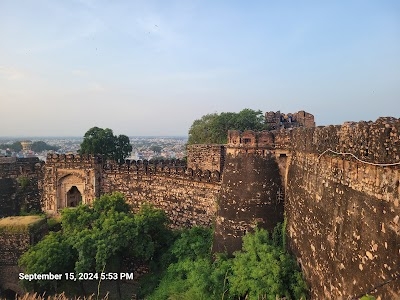
Historic Fortress – This is the iconic Jhansi Fort, a formidable historical fortress nestled atop a hill in Jhansi, Uttar Pradesh. It's most famously associated with Rani Laxmi Bai, the courageous Queen of Jhansi, and her valiant struggle during the Indian Rebellion of 1857.
Why people come here
Historical Exploration – People visit this fort to delve into a significant chapter of Indian history, to pay homage to the legendary Rani Laxmi Bai, and to witness the architectural prowess of the Bundela kings. It's a place for history enthusiasts, patriots, and those seeking panoramic views of Jhansi city.
What to expect
Immersive Experience – Expect to walk through ancient ramparts, explore various structures within the complex, and feel the echoes of a bygone era. The fort offers a glimpse into military strategy and royal life. You'll find impressive fortifications and, often, a lively atmosphere with fellow visitors.
Historical background
Bundela Legacy – Built in 1613 by Raja Bir Singh Deo of Orchha, this fort became the stronghold of the Jhansi kingdom. Its most celebrated period was during the 1857 uprising when Rani Laxmi Bai led her forces from its walls against the British. The fort stood as a powerful symbol of resistance and bravery.
Key highlights
Fortress Features – As you explore, look out for the Karak Bijli cannon, a massive weapon used during battles, and the Ganesh Temple and Shiv Temple located within the fort premises. The fort’s impressive walls, bastions, and the strategic layout are also key attractions, offering insights into ancient military architecture.
Practical info
Visitor Essentials – The fort is generally open during daylight hours, though specific timings can vary. There's typically an entry fee. Be prepared for a fair amount of walking and climbing stairs, as the fort is spread across a hill. Basic facilities like restrooms might be available.
Good to know
Strategic Location – The fort's location on a rocky hill provided a natural defensive advantage, overlooking the surrounding plains. It's a powerful reminder of Rani Laxmi Bai's indomitable spirit and her legacy as a national hero.