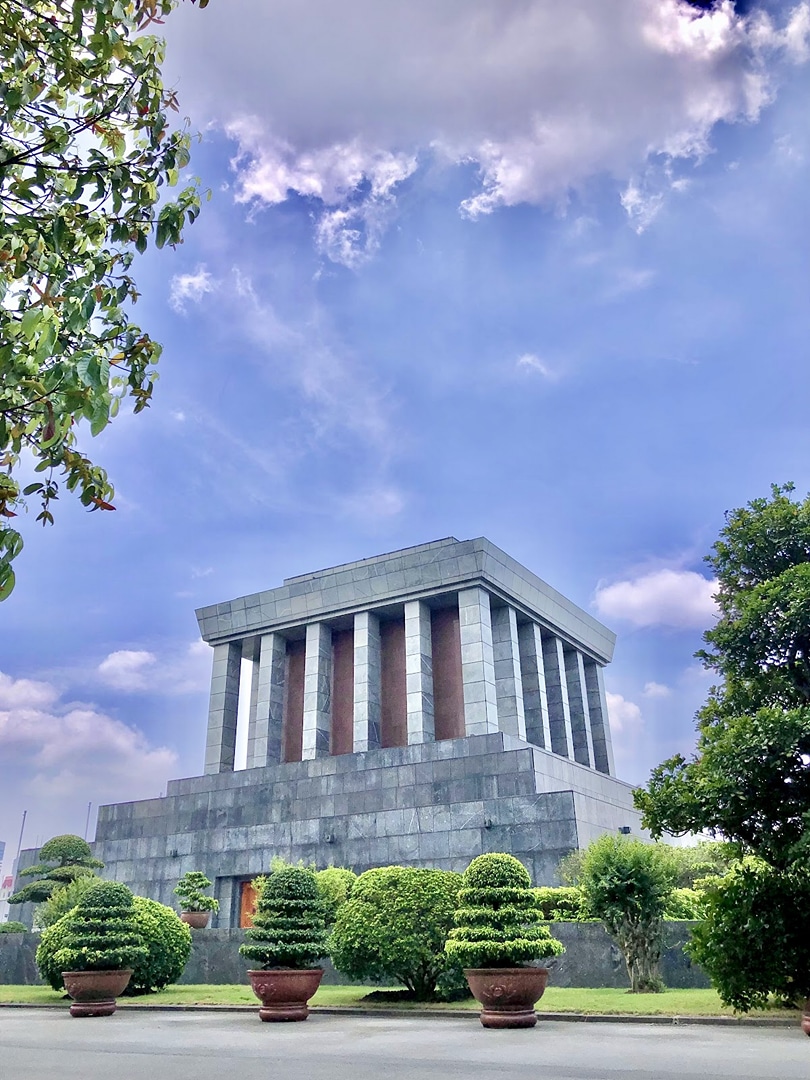
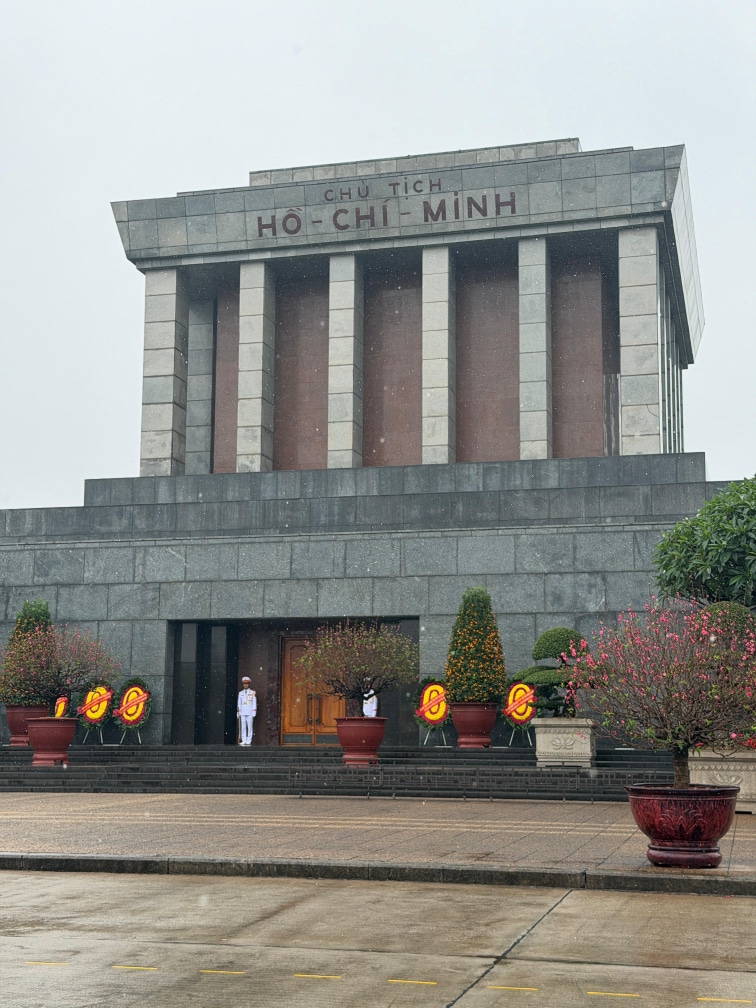
National Memorial – This is where the embalmed body of Ho Chi Minh, Vietnam's revered revolutionary leader, is preserved and displayed. It serves as a national memorial and a pilgrimage site for many Vietnamese people.
Historical background
Posthumous Wish – Despite Ho Chi Minh's expressed wish to be cremated, the mausoleum was constructed after his death in 1969, opening to the public in 1975. Its design draws inspiration from Lenin's Mausoleum in Moscow, incorporating Vietnamese architectural elements.
Why people come here
Pay Respects – Visitors come primarily to pay their respects to Ho Chi Minh, often referred to as "Uncle Ho." It offers a profound insight into Vietnamese history and national identity, drawing both local citizens and international visitors.
What to expect
Solemn Atmosphere – Expect a highly solemn and respectful atmosphere. There are strict rules for visitors, and the experience is often quiet and reflective, with a sense of reverence for the historical figure. Queues can be long, especially for the viewing of the body.
Key highlights
Embalmed Body – The central highlight is the viewing of Ho Chi Minh's embalmed body, housed in a dimly lit, glass-encased chamber. The surrounding complex also includes the Presidential Palace, Ho Chi Minh's Stilt House, and the One Pillar Pagoda , which are worth exploring.
Visitor conduct and etiquette
Strict Rules – Modest dress is required; shoulders and knees must be covered. Silence is mandatory inside the mausoleum, and visitors must walk in two lines. Photography, talking, and placing hands in pockets are strictly prohibited while viewing the body. Security checks are thorough.
Practical info
Limited Hours – The mausoleum is typically open only in the mornings, and often closed on Mondays and Fridays, as well as for an annual maintenance period (usually from September to November). The visit inside the mausoleum itself is brief, usually lasting only a few minutes, but the entire complex can take 1-2 hours to explore. Be prepared for queues and security procedures.