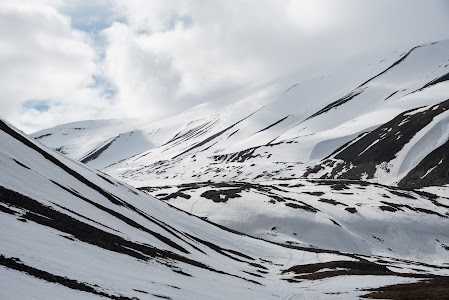
Glacier – Longyearbreen is a prominent glacier located just outside Longyearbyen , the main settlement on Svalbard. It's an accessible part of the Arctic landscape, offering a direct encounter with glacial ice formations.
Why people come here
Arctic Experience – People typically visit Longyearbreen for the unique opportunity to experience an Arctic glacier up close. It's a popular spot for guided glacier hikes and exploring seasonal ice caves, providing breathtaking views and a sense of adventure in a pristine environment.
What to expect
Icy Landscape & Exploration – Here, you can expect a truly Arctic environment with vast expanses of ice and snow, even in summer. The air is often crisp and cold. The experience is typically guided, offering a safe way to explore the glacier's features, from its rugged surface to its deep crevasses. During the colder months, exploring the intricate formations of a natural ice cave within the glacier is a highlight.
Best time to go
Seasonal Visits – The best time to visit depends on what you want to experience. For exploring ice caves, the winter months (roughly November to March) are ideal when the ice is stable. For general glacier walks and views, the summer months (June to August) offer milder conditions and 24-hour daylight.
Practical info
Guided Exploration & Safety – Visiting Longyearbreen typically requires participation in a guided tour for safety reasons, as the glacial terrain can be unpredictable. You'll need specialized gear like crampons and ice axes, usually provided by tour operators. Expect moderate physical effort, as walking on ice and snow can be demanding. Always dress in warm, layered clothing suitable for Arctic conditions.
Good to know
Permafrost Impact – The area around Longyearbreen is characterized by permafrost, meaning the ground is permanently frozen. This unique condition influences everything from local geology to plant life. Remember that all activities on the glacier should be undertaken with respect for the fragile Arctic ecosystem.