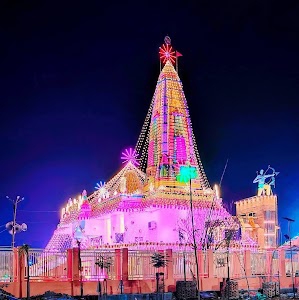
Hindu Temple – I know this as a prominent Hindu temple dedicated to Khatu Shyam Ji , revered as an incarnation of Barbarika, the grandson of Bhima from the Mahabharata. It's a significant pilgrimage site in Uttar Pradesh.
Why people come here
Pilgrimage & Blessings – Devotees primarily visit this temple to offer prayers, seek blessings from Khatu Shyam Ji, and fulfill vows. Many believe that sincere prayers here can lead to the fulfillment of wishes and relief from troubles. It's a place for spiritual solace and devotion.
Spiritual or cultural significance
Divine Protector – The temple holds deep spiritual importance for followers of Khatu Shyam Ji, who is often known as 'Teen Baan Dhari' (wielder of three arrows) and 'Haare Ka Sahara' (support of the defeated). The mythology surrounding his sacrifice and promise to protect the weak forms the core of its significance.
What to expect
Devotional Atmosphere – You can expect a vibrant and devotional atmosphere, often filled with the sounds of bhajans (devotional songs) and chants. The temple can be quite crowded, especially during festivals and auspicious days, with devotees waiting patiently for darshan (sacred viewing of the deity).
Visitor etiquette
Respectful Conduct – As with most religious sites in India, I recommend dressing modestly, covering your shoulders and knees. It is customary to remove your footwear before entering the main temple premises. Maintaining a respectful silence or speaking softly is appreciated, especially within the inner sanctum. Photography rules may vary, so it's wise to observe local signs or ask.
Practical info
General Guidance – The temple is generally open from early morning until late evening, though specific timings can vary. During peak pilgrimage seasons or major festivals, expect longer queues and higher crowd levels. It's advisable to plan for a visit duration of 1-2 hours for a peaceful darshan, potentially longer if you wish to participate in rituals or explore the surroundings.
Good to know
Festival Crowds – The Manona Dham temple witnesses a massive influx of devotees during major festivals like the Falguni Mela (around February-March) and Shyam Janmotsav. If you prefer a quieter visit, consider avoiding these peak times.