
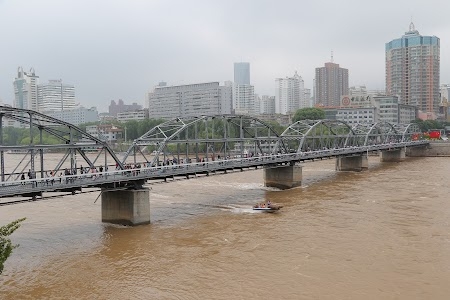



Zhongshan Bridge, China
What is this place? – I see this as a historic iron bridge that spans the Yellow River in Lanzhou , Gansu Province , China. It's often referred to as the "First Bridge over the Yellow River."
Why people come here – People typically visit to admire its historical significance and architectural design. It's a popular spot for photography, offering scenic views of the river and the city. Many also come for a leisurely stroll across the bridge.
What to expect – You can expect a bustling atmosphere, especially during peak hours, with both locals and tourists crossing the bridge. The experience is generally relaxed, offering a chance to observe daily life along the Yellow River . It's suitable for all ages.
Best time to go – The early morning or late afternoon are generally the best times to visit. The light is often softer for photography, and the temperatures are more pleasant, especially during the warmer months.
Historical Background
Construction History – This bridge holds significant historical value as the first permanent bridge built across the main stream of the Yellow River . It was constructed between 1907 and 1909 by German engineers and American materials, marking a pivotal moment in Chinese engineering and transportation.Key Highlights
Architectural Features – I find its iron truss structure particularly noteworthy, a testament to early 20th-century engineering. The bridge itself is a landmark, connecting the two banks of the Yellow River and offering panoramic views of the water and the surrounding urban landscape.Practical Info
Accessibility – The bridge is easily accessible on foot from various parts of Lanzhou . There are no specific entry fees to walk across the bridge. It's an open public space, and you can spend as much or as little time as you wish exploring it.Good to know – It's worth noting that the bridge was originally named "Lanzhou Yellow River Iron Bridge" and later renamed "Zhongshan Bridge" in honor of Dr. Sun Yat-sen . The bridge has withstood numerous floods and remains a vital part of Lanzhou's infrastructure and heritage.
