




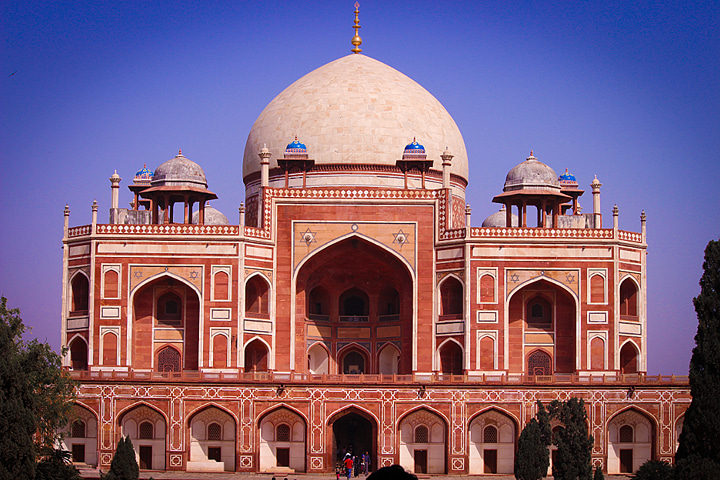
Humayun’s Tomb
Practicalities – There is an entry fee, and you should wear comfortable walking shoes as there is a fair amount of ground to cover. Parking is usually available nearby.
What is this place?
Mughal Mausoleum – I see this as a magnificent 16th-century tomb complex, often considered a precursor to the Taj Mahal. It serves as the final resting place of the Mughal Emperor Humayun and is a prominent example of early Mughal architecture, blending Persian and Indian styles.Historical Background
First Garden-Tomb – Construction of Humayun's Tomb began in 1565, commissioned by his first wife, Empress Bega Begum. It was the first garden-tomb on the Indian subcontinent and introduced the charbagh (four-part garden) concept to India. This UNESCO World Heritage Site marked a significant shift in Mughal architectural design.Why People Visit
Architectural Marvel – People typically visit to admire its stunning and historically significant Mughal architecture, explore the serene garden complex, and delve into the rich history of the Mughal Empire. It’s a popular destination for history enthusiasts, photographers, and those seeking a peaceful retreat within the city.Key Highlights
Grand Architecture – The main tomb, built primarily of red sandstone with white marble accents, is the central attraction. Other highlights include the intricate jali (lattice) work, the symmetrical charbagh gardens, the Barber's Tomb, and various smaller tombs and structures scattered throughout the expansive complex.What to Expect
Serene Grandeur – You can expect a spacious and beautifully maintained complex that exudes a sense of historical grandeur and tranquility. While it can draw crowds, especially on weekends and holidays, the vastness of the gardens often allows for moments of quiet reflection. It's a suitable experience for visitors of all ages.Planning Your Visit
Timing & Duration – I recommend visiting during the cooler months, from October to March, to comfortably explore the outdoor areas. Early mornings or late afternoons are generally less crowded. I'd say you'll need about 1.5 to 2.5 hours to thoroughly explore the tomb and its surrounding gardens.Practicalities – There is an entry fee, and you should wear comfortable walking shoes as there is a fair amount of ground to cover. Parking is usually available nearby.
Good to Know
UNESCO Site – This iconic monument is not just a tomb but also a significant landmark that inspired future Mughal architecture, including the famous Taj Mahal . It is also located close to the revered Nizamuddin Dargah , making it possible to visit both on the same day.