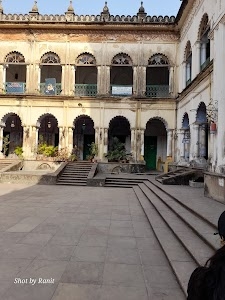
Religious and Historical Site – This is a prominent Shi'ite Muslim congregation hall and mosque, also known as the Imambara of Hooghly. It stands as a significant architectural and historical landmark in West Bengal, renowned for its grandeur and intricate design.
Spiritual and Historical Significance
Legacy and Faith – The Hooghly Imambara was built by Haji Muhammad Mohsin, a wealthy philanthropist, with construction commencing in 1841 and concluding in 1861. It serves as a vital center for religious observance, particularly during Muharram, and as a testament to 19th-century Indo-Islamic architecture.
Key Highlights
Architectural Marvels – I find the twin 85-foot-tall towers, or minarets, particularly striking, each with a spiral staircase leading to the top. Don't miss the impressive clock tower at the center, which still operates manually. Inside, the prayer halls feature chandeliers, calligraphic inscriptions, and a large central tank (houz) in the courtyard. The sundial is another fascinating detail.
What to expect
Peaceful Grandeur – You can expect a serene and awe-inspiring atmosphere within the Imambara's premises. The architecture itself is a major draw, offering a glimpse into historical craftsmanship. It's generally a peaceful place, though it can become quite busy during religious festivals.
Visitor Etiquette
Respectful Conduct – As a religious site, visitors are encouraged to dress modestly, covering shoulders and knees. Removing your shoes before entering the prayer areas is customary. Photography is generally permitted in most public areas, but it's always respectful to avoid disturbing worshippers.
Practical Info
Visiting Hours and Access – The Imambara is typically open from morning until late afternoon, though timings may vary. I recommend checking locally for the most current schedule. Allow about 1 to 1.5 hours to comfortably explore the main areas. It is accessible by road and is a short distance from Chinsurah Railway Station .
Good to know
Unique Clock Mechanism – The large clock, installed by a British firm, requires manual winding every week, a task that has been maintained for over a century. It's a remarkable piece of engineering history still in operation.