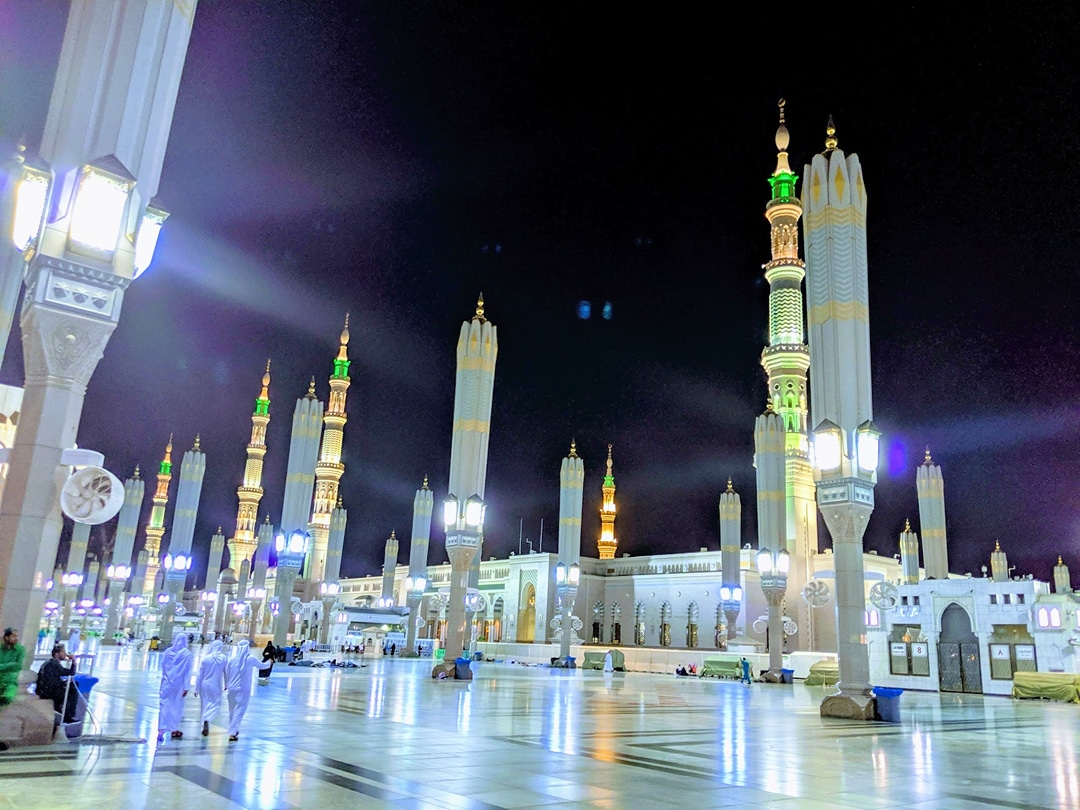
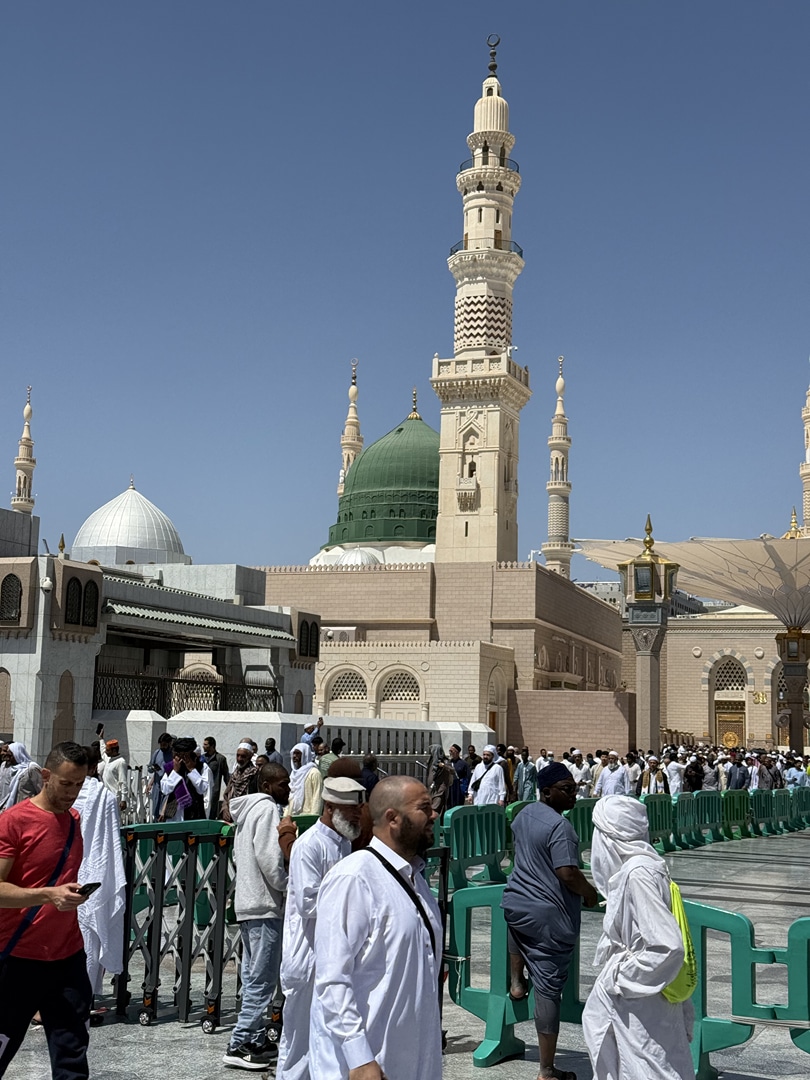
The Prophet's Mosque – This is Al Masjid an Nabawi (The Prophet's Mosque), a mosque established and originally built by the Islamic prophet Muhammad, located in the city of Medina in the Hejaz region of Saudi Arabia . It is the second-holiest site in Islam.
What is this place?
Sacred Mosque – Al Masjid an Nabawi is one of the largest mosques in the world and a site of immense spiritual significance for Muslims. It serves as a place of worship, a spiritual center, and the burial place of the Prophet Muhammad.
Why people come here
Pilgrimage and Prayer – People primarily visit for pilgrimage, especially during Hajj and Umrah, to pray, and to pay respects at the tomb of Prophet Muhammad. It is considered a deeply spiritual journey for Muslims worldwide.
What to expect
Reverent Atmosphere – Expect a profoundly reverent and peaceful atmosphere, often filled with a large number of pilgrims. The mosque is vast, with beautiful architecture and a sense of tranquility. It is suitable for individuals seeking spiritual reflection and communal prayer.
Spiritual or cultural significance
Second Holiest Site – This mosque holds paramount importance in Islam as it houses the tomb of Prophet Muhammad, as well as the tombs of the first two Rashidun Caliphs, Abu Bakr and Umar. It is also the site of the Rawdah, a special area considered to be a garden from Paradise.
Visitor etiquette
Respectful Conduct – Visitors are expected to dress modestly, covering arms and legs. Women are required to wear a head covering. Photography is generally permitted in most areas, but discretion is advised, especially near the Rawdah and inside the tombs. Maintain silence and show respect for those praying.
Practical info
Open All Hours – The mosque is generally open 24/7. However, access to certain areas, like the Rawdah, may have specific visiting hours or require prior arrangements, especially for women. Security checks are in place, and large bags may need to be stored.
Good to know
Green Dome – The iconic Green Dome, covering the tomb of Prophet Muhammad, is one of the most recognizable features of the mosque. The mosque complex also includes various historical columns and markers, each with its own story.