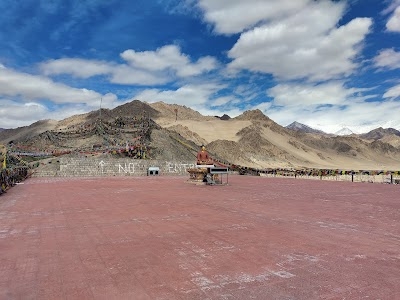
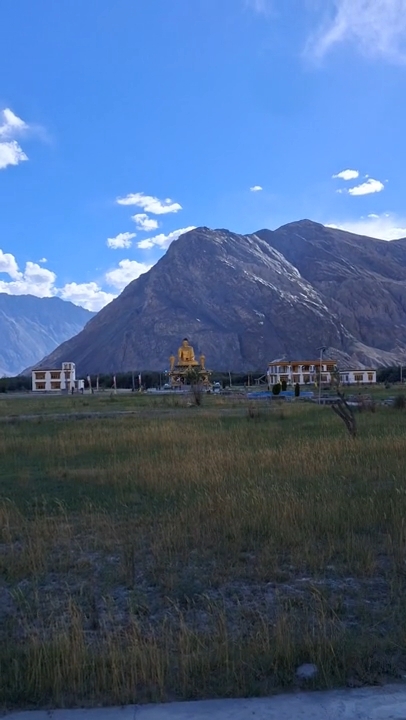
Prominent Landmark – I see this as a significant and serene statue of Buddha, often found at an elevated point overlooking the scenic town of Leh. It typically serves as a symbol of peace and spiritual contemplation in the heart of Ladakh.
Why people come here
Panoramic Views – Many visitors come here for the breathtaking panoramic views of the Leh Valley, the surrounding mountains, and the distant snow-capped peaks. It's also a place for quiet reflection, spiritual reverence, and capturing stunning photographs.
What to expect
Serene Experience – You can expect a peaceful and spiritual atmosphere, often involving a short climb or drive to reach the statue. The area around it is usually well-maintained, offering comfortable spots to sit and soak in the majestic landscape. It’s a place that suits those seeking tranquility and impressive vistas.
Spiritual or cultural significance
Symbol of Peace – For me, this statue embodies the deep Buddhist heritage and spiritual ethos of Ladakh. It stands as a powerful symbol of peace, enlightenment, and the region's rich cultural identity, inspiring devotion and calm among visitors and locals alike.
Best time to go
Morning or Evening – I find that early mornings or late afternoons are ideal for visiting. The light is often softer for photography, and the crowds are generally thinner. During these times, you can also witness beautiful sunrises or sunsets over the Himalayas.
Practical info
Easy Access – Access to such statues is generally straightforward, often involving a well-paved road or a series of steps. While there are typically no strict entry timings, it's wise to respect local customs and maintain decorum.
Good to know
Photography Spot – This location is a prime spot for landscape photography, especially during the 'golden hour'. I'd suggest wearing comfortable shoes if there's a climb involved, and carrying a light jacket as the weather can change quickly at higher altitudes.