
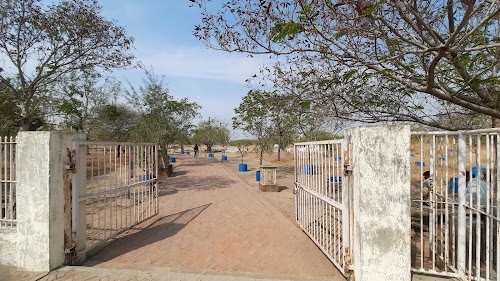



Lothal: Ancient Harappan Port City
What is this place? – Lothal is an ancient city and one of the most prominent sites of the Indus Valley Civilization (also known as the Harappan Civilization). It served as a vital port city, connecting the Harappan people to distant lands through maritime trade. I find it fascinating how well-planned and advanced this ancient city was.
Why people come here – Visitors come to Lothal to explore the archaeological ruins of a sophisticated ancient civilization. It's a journey back in time to witness the ingenuity of the Harappan people, especially their urban planning and maritime engineering.
What to expect – You can expect to see the well-preserved remains of a Harappan city, including a meticulously planned layout with a citadel, lower town, and what archaeologists believe to be the world's earliest known dockyard. The site also features a museum that houses artifacts found during excavations, providing deeper insights into their culture and daily life. It's generally a quiet and contemplative experience, suitable for those interested in history and archaeology.
Best time to go – The winter months, from October to March, are generally the most comfortable for visiting Lothal , as the weather is cooler and more pleasant for outdoor exploration. Summers can be quite hot.
How much time to spend – I recommend spending around 2 to 3 hours at Lothal . This allows enough time to explore the archaeological site thoroughly and visit the on-site museum.
Historical background
Ancient Origins – Lothal dates back to around 2400 BCE. It was a thriving port city and a significant center for trade, connecting the Harappan civilization with Mesopotamia and other ancient cultures. The city was discovered in 1954 and excavated by the Archaeological Survey of India .
Key highlights
Major Attractions – Look out for the dockyard, which is considered an engineering marvel of its time, showcasing the advanced hydraulic knowledge of the Harappans. You'll also see the remains of the warehouse, the citadel, and the lower town with its drainage system and residential blocks. The Archaeological Museum on site is a must-visit to see pottery, beads, seals, and tools unearthed from the ruins.
Practical info
Accessibility and Facilities – The site is relatively easy to navigate, with pathways connecting the different sections of the ruins. There are usually basic facilities available, including restrooms. It’s advisable to carry water, especially during warmer months, as you'll be outdoors for most of your visit.
