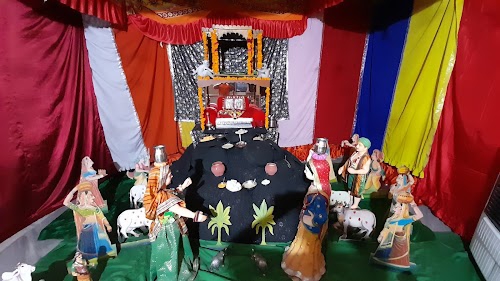
Religious Site – Shree Dwarkadish Haveli is a religious site dedicated to Lord Dwarkadish.
What is this place?
Devotional Center – This is a traditional Haveli structure that serves as a devotional center. It is primarily dedicated to the worship of Lord Dwarkadish, a form of Lord Krishna. Here, devotees gather for prayers and spiritual observances.
Why people come here
Worship and Blessings – People typically visit Shree Dwarkadish Haveli to offer prayers, seek blessings from Lord Dwarkadish, and participate in religious ceremonies. It is a place for spiritual solace and connection with the divine for the local community and visitors.
Spiritual or cultural significance
Krishna Devotion – This Haveli holds spiritual significance due to its dedication to Lord Dwarkadish, who is revered as the King of Dwarka and a principal deity in Vaishnavism. It represents a local center for Krishna devotion and upholds traditional religious practices in the Vaniyavad area.
What to expect
Peaceful Atmosphere – I expect a serene and devotional atmosphere within the Haveli. Visitors can anticipate seeing traditional temple architecture and experiencing local customs of worship. It generally suits those looking for a quiet spiritual experience.
Visitor etiquette
Respectful Conduct – When visiting, I recommend dressing modestly as a sign of respect for the sacred space. It is customary to remove footwear before entering the main prayer areas. Maintaining a quiet demeanor and refraining from loud conversations is generally appreciated.
Practical info
Daytime Visits – This place is generally accessible during daytime hours, though specific timings may vary. It is advisable to check locally for current opening and closing times. Accessibility is typically straightforward within the Vaniyavad locality.
Good to know
Traditional Architecture – The term "Haveli" itself suggests a traditional architectural style, often characterized by intricate carvings and courtyards. This site likely offers a glimpse into local cultural heritage alongside its religious function.