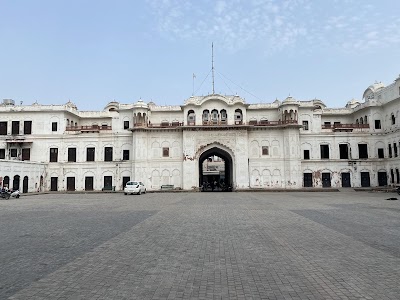
Chandni Chowk, Adalat Bazar, Patiala, Punjab, India
Qila Mubarak
Explurge-Ins
11
Ratings (8.2K)
4.3
Distance
-
Posts from Users
Qila Mubarak, Patiala
What is this place?
Historic Fortress – This is a grand fort complex, an architectural marvel that served as the principal residence and seat of power for the Patiala royal family. It's a significant landmark reflecting the region's rich history.
Why people come here
History & Architecture – People visit to explore its historical significance, admire the intricate Mughal and Rajasthani architectural styles, and experience a glimpse into the opulent past of the Patiala state.
What to expect
Cultural Immersion – I find that visitors can expect a journey through various courtyards, palaces, and museums within the complex. It's generally a calm and informative experience, suitable for history enthusiasts, architecture lovers, and families.
Historical background
Royal Legacy – The Qila Mubarak was originally built as a kachi garhi (mud fort) by Baba Ala Singh in 1764 and was later developed into a sprawling fort. It houses several palaces, including the Darbar Hall, and a mosque, showcasing centuries of royal history.
Key highlights
Palace Complex – Explore the various sections like the Qila Androon, which comprises several palaces with unique frescoes and mirror work.
Darbar Hall – This grand hall once hosted royal assemblies and is now a museum displaying weapons, costumes, and artifacts.
Ran Basera – Discover the residential quarters that offer insights into the royal lifestyle.
How much time to spend
2-3 Hours – I'd recommend allocating about 2 to 3 hours to comfortably explore the major parts of the fort complex and its museums.
Practical info
Entry & Exploration – The fort is generally open during daytime hours. While some areas are well-maintained, others might show signs of age. Wear comfortable shoes as there's a fair bit of walking involved.
Good to know
Architectural Blend – The fort is a unique blend of Mughal, Rajasthani, and even some European architectural influences, reflecting the diverse cultural exchanges during its construction and expansion.