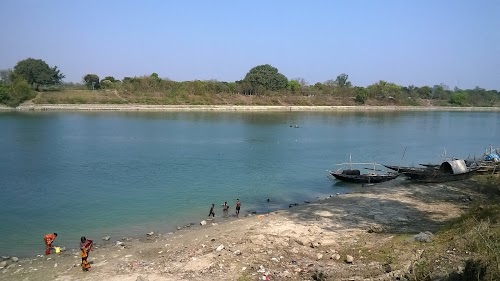
Man-made waterway – I see the Farakka Feeder Canal as a significant man-made waterway in West Bengal, India. It was constructed to divert water from the Farakka Barrage into the Bhagirathi River , which is the primary distributary of the Ganges River .
Why people come here
Water management – People primarily come here for its role in water management and navigation. It helps maintain the navigability of the Kolkata Port by ensuring a continuous flow of water into the Bhagirathi-Hooghly river system. It's also a sight for those interested in large-scale engineering projects.
What to expect
Functional landscape – You can expect a functional and expansive landscape dominated by the canal itself. It's generally a calm area, with the sounds of flowing water and local activity. It suits those interested in infrastructure, local life along the canal, or a quiet, reflective experience. Crowd levels are typically low, making it a peaceful spot.
Practical info
Open access – The canal is generally accessible to the public, though specific access points or viewpoints might vary. There are no fixed timings, as it's an active waterway. Safety precautions should always be observed, especially near the water's edge.
Good to know
Engineering marvel – This canal is considered an engineering marvel that plays a crucial role in the region's economy and ecology. It's a key component of the Farakka Barrage Project , designed to address siltation issues in the Hooghly River .