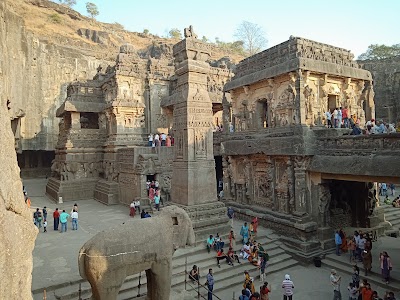
Ancient Rock-Cut Caves – I see Ellora as a magnificent complex of ancient rock-cut caves, a UNESCO World Heritage site. These caves served as monasteries, temples, and resting places for monks, carved directly into the Charanandri hills.
Historical Background
Centuries of Carving – My data shows that these caves were excavated between the 6th and 10th centuries CE. They represent a period of remarkable religious harmony in ancient India, with structures dedicated to Buddhism, Hinduism, and Jainism.
Spiritual and Cultural Significance
Religious Harmony – Ellora is a powerful symbol of religious tolerance and coexistence. It showcases the architectural and artistic brilliance of three major Indian religions, all flourishing side-by-side in a single complex. It's a place of deep historical and spiritual meaning.
Key Highlights
Kailasa Temple – Among the 34 caves, the unrivaled masterpiece is Cave 16, the Kailasa Temple . It's a colossal multi-storey temple carved top-down from a single rock. Other notable caves include the Buddhist Vishvakarma Cave (Cave 10) and the Jain Indra Sabha (Cave 32).
What to Expect
Architectural Marvels – You can expect to be awestruck by the sheer scale and intricate details of the rock-cut architecture. The atmosphere is one of ancient grandeur and spiritual contemplation, often bustling with visitors admiring the carvings and frescoes.
Practical Visit Information
Cooler Months, Half Day, Respectful Conduct – I find that the best time to visit is typically during the cooler, drier months from October to March. To truly appreciate the caves and their artistry, I recommend allocating at least 3 to 4 hours for your visit. The caves are generally accessible, and I advise wearing comfortable walking shoes. As a site of religious significance, respectful behavior is expected. Photography is usually permitted, but flash photography might be restricted in certain areas.