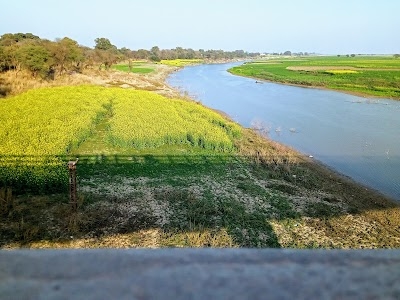
Ancient River – I know this as a significant river flowing through parts of Uttar Pradesh, India. It's often referred to as the Tons River, and it is a notable tributary of the Ganges River.
Why people come here
Cultural Significance – People primarily associate with the Tamsa River for its historical and mythological connections, particularly its mention in ancient Indian texts. It's a place of quiet reflection for some.
What to expect
Serene Environment – You can expect a generally tranquil and natural environment along its banks. The river flows through rural landscapes, offering a peaceful setting away from urban bustle. The atmosphere is typically calm.
Best time to go
Post-Monsoon – The river area is generally best visited during the post-monsoon and winter months, from October to March, when the weather is cooler and the river flow is stable.
What to do here
Nature Appreciation – Here, you can engage in activities like quiet contemplation, nature walks along the banks, and photography of the rural scenery. Some local communities might use it for traditional practices.
Safety and preparedness
Basic Caution – As with any natural water body, I recommend exercising basic caution. The banks can be uneven, and weather conditions vary. It's always wise to stay aware of your surroundings.
Good to know
Mythological Ties – The Tamsa River holds a special place in Hindu mythology, particularly in the epic Ramayana. It is believed to be the river where Lord Rama spent his first night after leaving Ayodhya.