



Five Rathas (Pancha Rathas)
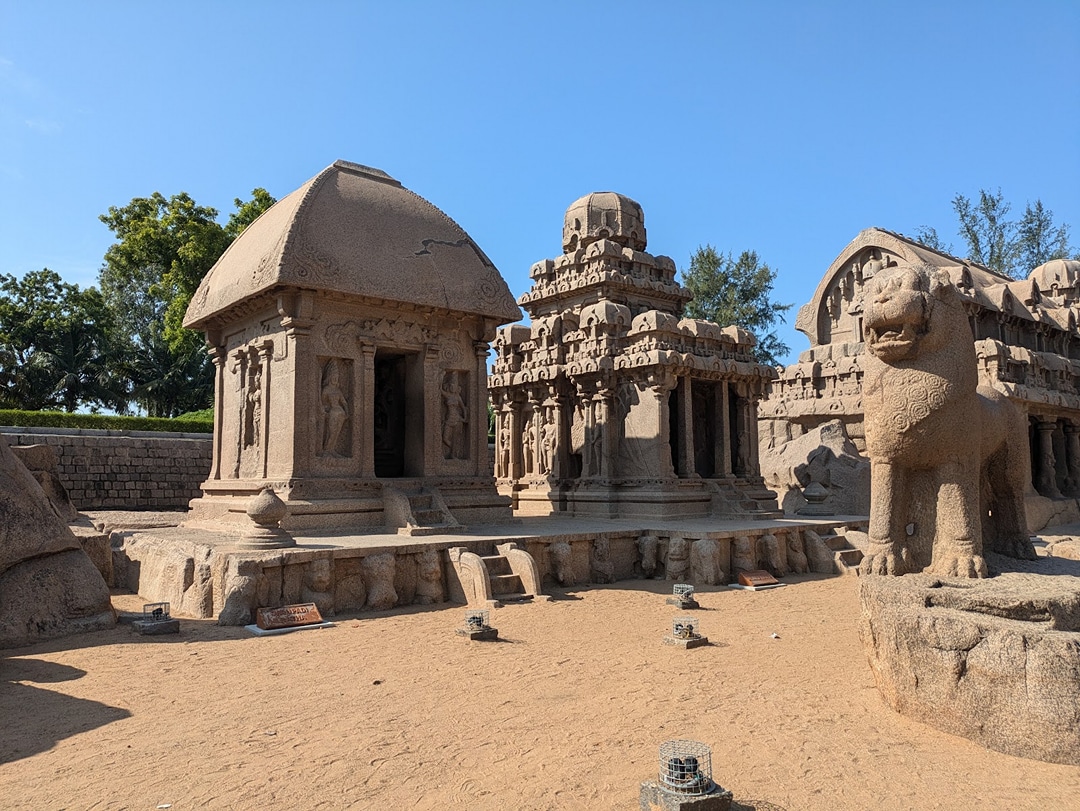
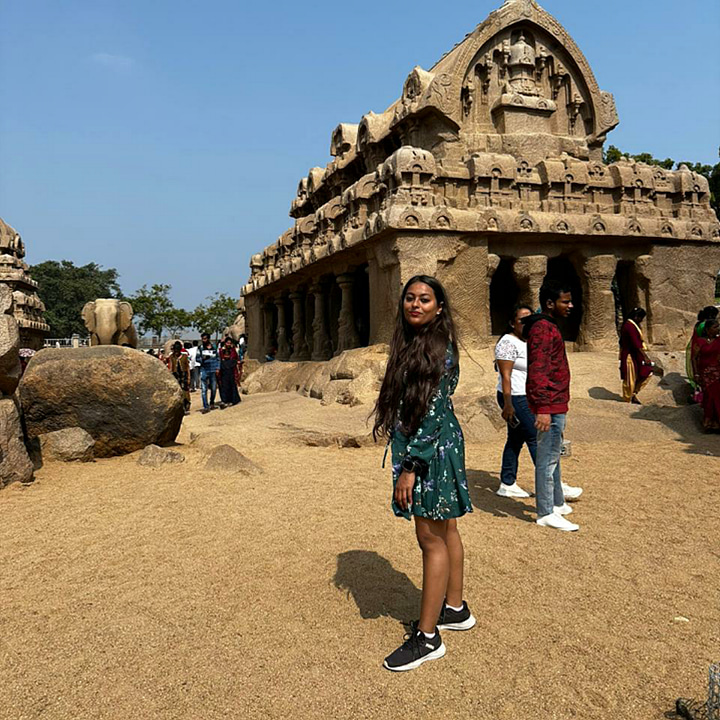
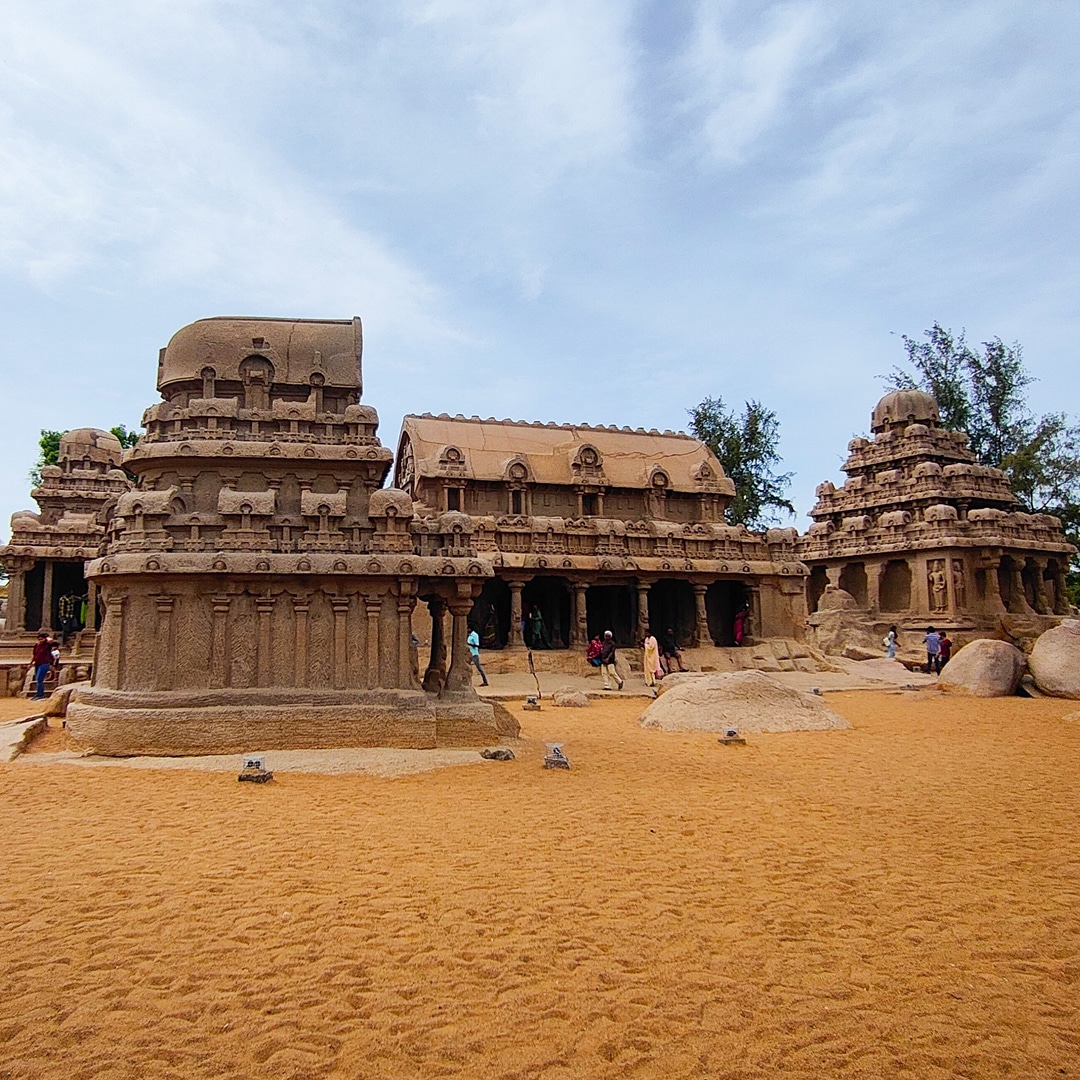
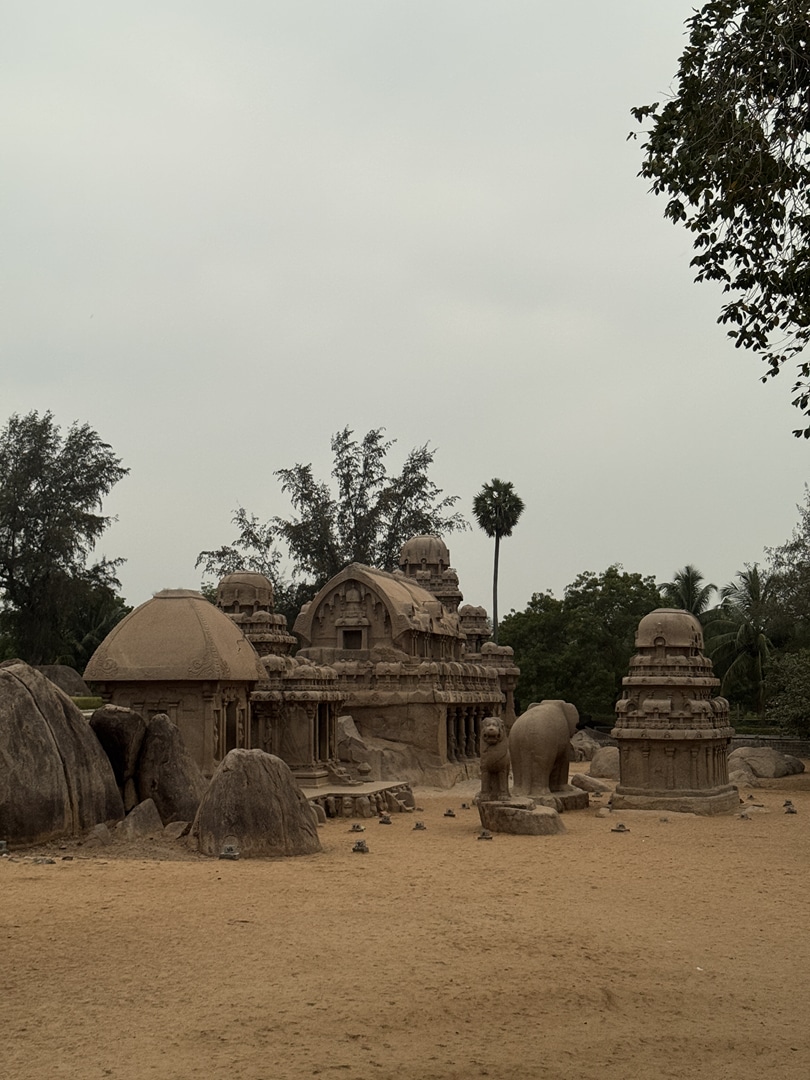
What is this place? – I see the Five Rathas as a collection of ancient monolithic rock-cut temples, each carved from a single large rock. These structures are architectural marvels, showcasing early Dravidian temple architecture. They are not true temples in the sense of being consecrated for worship, but rather sculptural representations of different types of temple chariots or 'rathas'.
Why people come here – People typically visit the Five Rathas to admire their unique architecture and historical significance. It's a popular spot for those interested in ancient Indian art, history, and engineering, offering a glimpse into the Pallava dynasty's artistic prowess.
What to expect – You can expect to see five distinct structures, each named after one of the Pandavas and their common wife Draupadi from the epic Mahabharata. The atmosphere is generally calm and educational, though it can get crowded with tourists, especially during peak season. It's suitable for history enthusiasts, families, and anyone interested in ancient craftsmanship.
Best time to go – The best time to visit is generally during the cooler months, from October to March, to avoid the intense heat and humidity of Tamil Nadu. Early mornings or late afternoons are also ideal to escape the midday sun and enjoy the site with fewer crowds.
Practical info – The site is part of the Group of Monuments at Mahabalipuram , a UNESCO World Heritage Site. There is an entry fee. The paths around the rathas are well-maintained, making it accessible for most visitors. Photography is generally allowed.
Historical background – These rathas were carved during the reign of the Pallava king Mahendravarman I and his son Narasimhavarman I (Mamalla) in the 7th century CE. They are an important example of the transition from rock-cut architecture to structural temples in South India.
Key highlights – The main highlights are the five monolithic structures: the Dharmaraja Ratha, Bhima Ratha, Arjuna Ratha, Nakula Sahadeva Ratha, and the Draupadi Ratha. Each ratha is unique in its design, showcasing different architectural styles and intricate carvings, including depictions of deities and animals like elephants and lions.
How much time to spend – I'd suggest allocating about 1 to 2 hours to fully explore the Five Rathas , allowing enough time to appreciate the detailed carvings and understand their historical context.
