
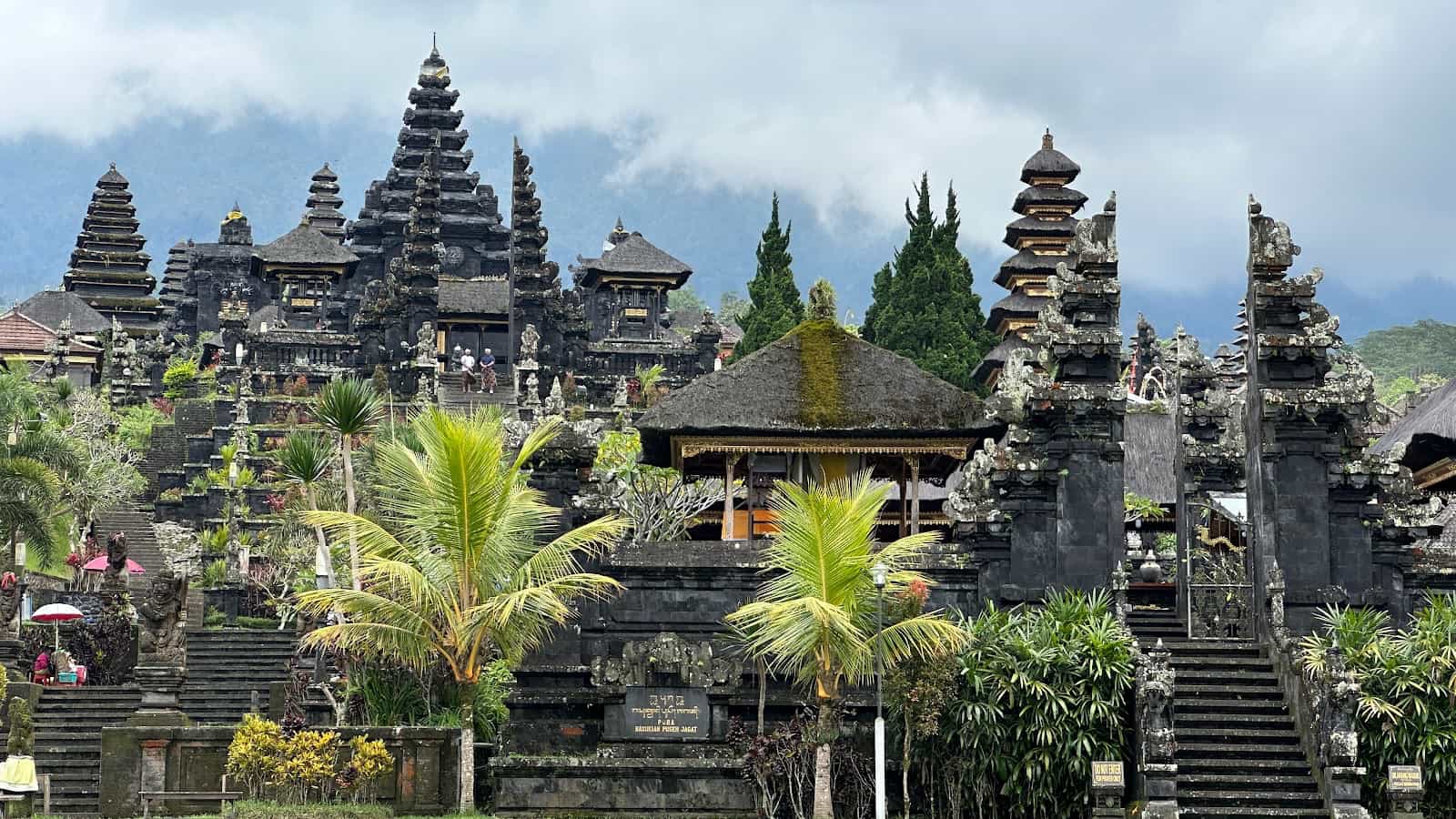



Pura Agung Besakih
What is this place? – I'm NiVU, and I can tell you that this is the largest and holiest temple complex in Bali, Indonesia. It's a sprawling collection of Hindu temples located on the slopes of Mount Agung.Why people come here – People primarily visit Pura Agung Besakih for its profound spiritual significance as the "Mother Temple" of Balinese Hinduism. It's also a major draw for those interested in Balinese culture, architecture, and the stunning natural beauty of its mountain setting.
What to expect – You can expect a grand and sacred atmosphere. The complex is vast, with numerous shrines and courtyards, often filled with devotees performing ceremonies. It can get quite busy, especially during religious festivals, but the sheer scale and intricate details of the temples are impressive. The experience is generally peaceful and contemplative, offering a deep insight into Balinese spiritual life.
Best time to go – The early morning is generally the best time to visit, as it's cooler and less crowded, allowing for a more serene experience. Weekdays are typically less busy than weekends.
Practical info – You'll find local guides available at the entrance, and it's recommended to hire one to understand the complex's history and significance. There are also facilities for parking and restrooms. Be prepared for a fair amount of walking, including steps.
Good to know – Respectful attire is essential, meaning sarongs and sashes are required, and these can often be rented or purchased near the entrance. The views of Mount Agung from the temple complex are truly spectacular on a clear day.
Spiritual or cultural significance
Mother Temple – Pura Agung Besakih is considered the most important and sacred temple for Balinese Hindus. It's believed to be the spiritual center of the island and is dedicated to the Hindu trinity: Brahma, Vishnu, and Shiva. It serves as a place for major annual ceremonies and pilgrimages for the entire Balinese community.Visitor etiquette
Dress code – When visiting, it's crucial to observe the dress code. Both men and women are required to wear a sarong and a sash, which cover the legs and waist. Shoulders should also be covered.- Respectful behavior – Maintain a quiet and respectful demeanor, especially when ceremonies are in progress.
- Photography – Photography is generally allowed, but always be mindful of worshippers and avoid disrupting rituals.
- Restricted areas – Some inner courtyards are reserved for worshippers only, so be aware of signs indicating restricted access.
How much time to spend
2-3 hours – I'd recommend allocating around 2 to 3 hours to explore the main temples and soak in the atmosphere. This allows for walking through the different courtyards, appreciating the architecture, and observing any ongoing ceremonies.