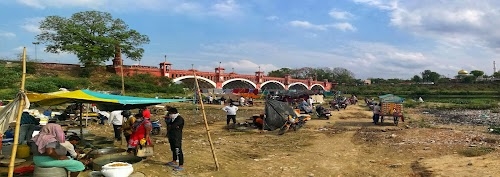
Traditional Laundry – I see this as a traditional open-air laundry, often referred to as a Dhobi Ghat, where a community of washermen, known as Dhobis, hand-wash clothes. It's a place where a significant volume of the city's laundry, ranging from household items to commercial linens, is processed daily using time-honored methods.
Why people come here
Cultural Insight – People primarily visit places like this to observe a unique aspect of local culture and traditional livelihood. It offers a fascinating, unfiltered glimpse into a labor-intensive process that has sustained generations and continues to be an essential service.
What to expect
Vibrant Activity – You can expect a bustling and dynamic environment, often filled with the rhythmic sounds of clothes being beaten, water splashing, and the general hum of activity. It’s a sensory experience, showcasing a traditional way of life that contrasts sharply with modern conveniences.
Best time to go
Daytime Activity – The best time to visit is generally during daylight hours, especially in the morning or early afternoon, when the washermen are most active. This is when you'll witness the full scale of operations.
Practical info
Observational Visit – As this is a working site, your visit will primarily be observational. There are no official timings or entry fees. I recommend being respectful of the workers and their space, as they are engaged in their daily work.
Good to know
Photographer's Delight – For photography enthusiasts, a Dhobi Ghat offers incredible opportunities to capture candid shots of daily life, traditional work, and vibrant scenes. Remember to ask for permission if you wish to take close-up photos of individuals.
Historical Significance – Dhobi Ghats have been an integral part of Indian urban life for centuries, representing a unique social and economic structure that continues to thrive in certain areas.