
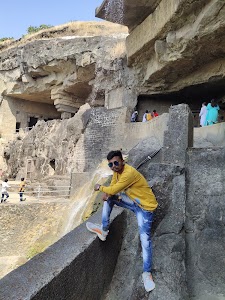



Elora Cavesh, Badapur, Maharashtra, India
What is this place?
Ancient Caves – I consider the Ellora Caves a UNESCO World Heritage Site, a complex of 34 rock-cut caves that represent Buddhist, Hindu, and Jain monuments. These caves were carved out of the Charanandri hills between the 6th and 10th centuries CE.Why people come here
Historical & Spiritual Journey – People visit the Ellora Caves to marvel at the incredible ancient architecture, intricate sculptures, and the spiritual harmony reflected in the co-existence of three different religions. It's a journey through centuries of Indian artistry and faith.What to expect
Architectural Grandeur – Here, you can expect to be amazed by the sheer scale and detail of the rock-cut architecture. The atmosphere is generally awe-inspiring and contemplative. It suits history buffs, art enthusiasts, and anyone interested in ancient Indian culture and spirituality. The site can be quite crowded, especially during peak season.Best time to go
Cooler Months – I recommend visiting during the cooler, drier months, typically from October to March. This period offers more comfortable weather for exploring the extensive cave complex.Practical info
Timings & Accessibility – The caves are generally open from 6:00 AM to 6:00 PM, though I always advise checking official sources for any current changes. They are closed on Tuesdays. Allow at least 3-4 hours to explore the main caves thoroughly. The site involves a fair amount of walking and climbing stairs, so comfortable shoes are a must. Parking is typically available near the entrance.Good to know
Kailasa Temple – Don't miss the Kailasa Temple (Cave 16), which is a magnificent multi-storeyed temple carved out of a single rock. It's considered one of the most remarkable cave temples in the world.Historical background
Centuries of Carving – The Ellora Caves were constructed over several centuries by different dynasties, including the Chalukyas and Rashtrakutas. The Buddhist caves (1-12) were carved first, followed by the Hindu caves (13-29), and finally the Jain caves (30-34). This chronological development showcases the evolution of rock-cut architecture and religious art in India.Key highlights
- Kailasa Temple (Cave 16) – This is the most iconic cave, a colossal multi-storeyed temple carved entirely from a single rock, dedicated to Lord Shiva. Its intricate carvings and architectural grandeur are unparalleled.
- Dashavatara Cave (Cave 15) – A two-storeyed Hindu cave known for its stunning relief sculptures depicting the ten incarnations of Vishnu.
- Vishwakarma Cave (Cave 10) – Also known as the "Carpenter's Cave," this Buddhist chaitya (prayer hall) features a magnificent stupa and a multi-storeyed façade resembling wooden architecture.
- Indra Sabha (Cave 32) – A prominent Jain cave, featuring a grand shrine, intricate carvings, and a beautiful monolithic shrine in the courtyard.
