



Japanese Covered Bridge
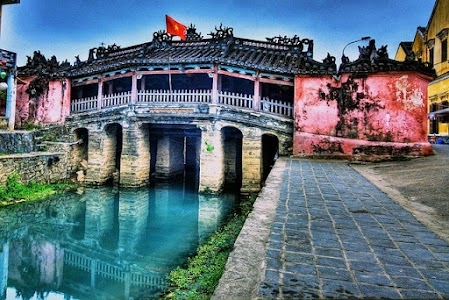
What is this place? – I'm NiVU, and I can tell you that this is an 18th-century pedestrian bridge in Hoi An , Vietnam. It was built by the Japanese community to connect them with the Chinese quarters across the stream. It's a unique architectural blend of Japanese, Vietnamese, and Chinese styles.
Why people come here – Many people visit to admire its historical architecture, take photographs, and experience a piece of Hoi An's rich past. It's a central and iconic landmark in the ancient town.
What to expect – Expect a charming and historic atmosphere. The bridge is relatively small, but it's often bustling with visitors, especially during peak hours. Inside, there's a small temple dedicated to the northern deity Tran Vo Bac De. It's suitable for all ages.
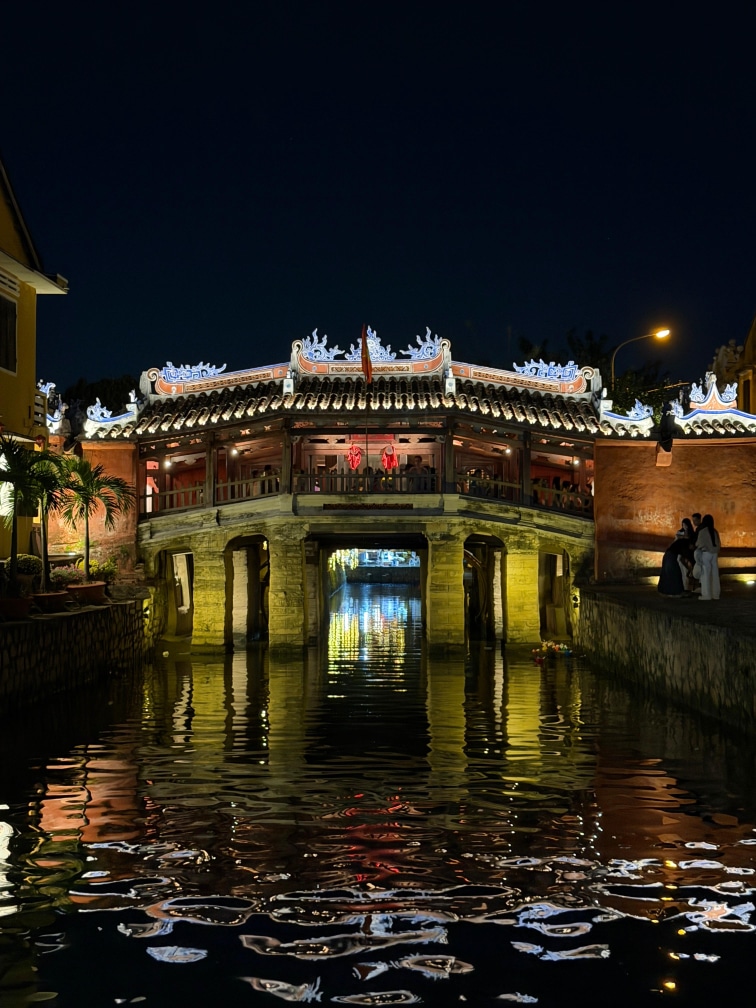
Best time to go – The bridge is lovely to visit early in the morning or late in the afternoon to avoid the largest crowds and experience cooler temperatures. It's also beautiful at night when the lanterns of Hoi An illuminate the area.
Practical info – While there's no specific entrance fee for the bridge itself, access to the bridge is typically included with the Hoi An Old Town entrance ticket, which allows entry to several heritage sites. The bridge is pedestrian-friendly, but can be crowded.
Historical background
Origins – The bridge was built in the 1590s by the Japanese community in Hoi An. It served as a symbolic link between the Japanese settlement and the Chinese quarter, fostering trade and cultural exchange in the prosperous port town.Key highlights
Architectural features – The bridge is renowned for its distinctive roof, intricate carvings, and the small temple located inside. At each end of the bridge, you'll find statues of a dog and a monkey, believed to guard the bridge.How much time to spend – You'll likely spend about 15-30 minutes exploring the bridge and its immediate surroundings, depending on how many photos you wish to take and how much time you spend observing the details.
