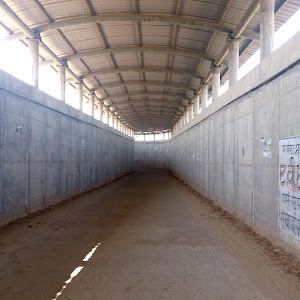
Junction Point – This is a designated point where a road or pathway intersects with railway tracks at the same level. In India, these crossings are a common sight, serving as crucial links for local communities and transportation networks, facilitating movement across the railway infrastructure.
Why people come here
Transit Route – People primarily come here to cross from one side of the railway tracks to the other. It's an essential part of daily commutes, travel between villages and towns, and for transporting goods, allowing vehicles and pedestrians to safely traverse the railway line.
What to expect
Controlled Passage – When approaching a railway level crossing, I recommend expecting barriers or gates, warning signs, and sometimes a signalman. You’ll typically encounter waiting periods as trains approach or pass, and the atmosphere can be busy, especially during peak hours. **Patience** is key, as safety protocols require waiting until the crossing is clear.
Practical info
Safety First – My top advice for a railway level crossing is to prioritize safety. Always adhere to the traffic signals, warning bells, and barrier movements. Never attempt to cross when the barriers are closing or closed, or if a train is visible or audible. **Waiting times** can vary significantly, from a few minutes to occasionally longer, depending on train schedules and traffic volume.
Good to know
Be Aware – In India, many level crossings are manually operated, and some may be unmanned, especially in rural areas. It's vital to be extra vigilant and look both ways before crossing, even if barriers are open. Always assume a train could be approaching. Also, be mindful of the **local traffic flow** and pedestrian movement around these points.