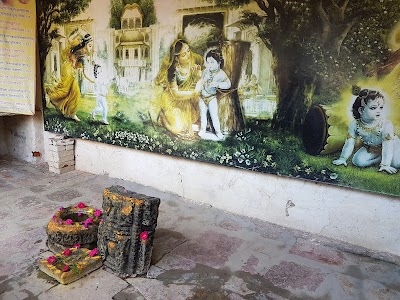
Sacred Spot – This is a revered spot in Gokul , believed to be the exact location where Lord Krishna's foster mother, Yashoda, tied him to a grinding mortar (ukhal) during his childhood. It marks a significant event in the divine play (lila) of Krishna.
Why people come here
Spiritual Connection – People visit Ukhal Bandhan Sthal to connect with the childhood stories of Lord Krishna. It's a pilgrimage for devotees seeking to experience the sacred grounds associated with his early life and divine miracles.
Spiritual or cultural significance
Damodara Lila – This site holds immense spiritual significance as the setting for the "Damodara Lila." It is here that Krishna, tied to the mortar, dragged it between two Arjuna trees, causing them to fall and liberating the cursed Yakshas, Nalakuvara and Manigriva. This event symbolizes the breaking of material attachments through devotion.
Historical background
Ancient Roots – The existence of this sacred spot is rooted deeply in ancient Hindu scriptures, particularly the Bhagavata Purana. While the physical structure might have evolved over centuries, the location has been revered for millennia as part of the historical landscape of Braj, where Krishna spent his early years.
What to expect
Reverent Atmosphere – I find that visitors can expect a simple and deeply spiritual atmosphere here. The site typically features a representation of the grinding mortar and the two trees. It’s a place for quiet contemplation and devotion, often with local priests performing rituals or sharing stories.
Visitor etiquette
Respectful Conduct – As with most religious sites in India, I recommend dressing modestly, covering your shoulders and knees. It is customary to remove your footwear before entering the main shrine area. Maintaining a respectful silence and observing the local customs enhances the spiritual experience for everyone.
Good to know
Braj Pilgrimage – Ukhal Bandhan Sthal is an integral part of the Braj pilgrimage circuit, which covers numerous sites associated with Lord Krishna's life. It's particularly significant during the Hindu month of Kartika (around October-November), known as Damodara month, when this specific lila is widely celebrated.