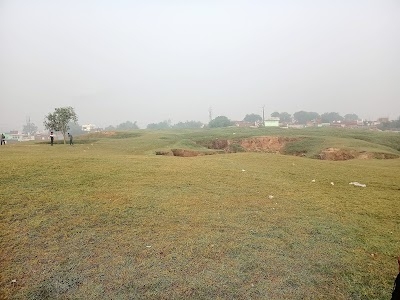
Jajmau Tila: An Ancient Archaeological Mound in Kanpur
What is this place?
Ancient Settlement – This is an ancient archaeological mound, often referred to as a "tila," which represents centuries of continuous human habitation. It's a significant historical site that has unveiled layers of past civilizations.
Why people come here
Historical Exploration – People typically visit Jajmau Tila to explore its historical significance and imagine the ancient civilizations that once thrived here. It serves as a window into the region's deep past for history enthusiasts and researchers.
What to expect
Layered History – You can expect to see an elevated area that has been subject to archaeological excavations, revealing different cultural periods. The site offers a quiet, reflective experience, allowing you to connect with ancient history.
Good to know
Ganga Proximity – The tila is situated near the banks of the Ganga River , which historically played a crucial role in the settlement's development and trade routes. This proximity adds to its geographical and historical context.
Historical background
Continuous Habitation – Jajmau Tila boasts a history of continuous human settlement dating back to the Copper Age (Chalcolithic period), around 1300-1200 BCE. Archaeological findings here include pottery, tools, and structures from various eras, including the Mauryan, Sunga, Kushan, and Gupta periods, as well as the medieval era. It's considered one of the oldest inhabited sites in the region.
Key highlights
Archaeological Finds – The site is notable for the artifacts unearthed during excavations, which provide insights into the daily lives, crafts, and cultural practices of ancient communities. While many artifacts are housed in museums, the mound itself showcases the stratified history. The remains of ancient structures and pottery shards are often visible, hinting at its rich past.
How much time to spend
Brief Exploration – I recommend allocating about 1 to 2 hours for a thorough visit. This allows enough time to walk around the site, observe the archaeological features, and absorb the historical atmosphere.