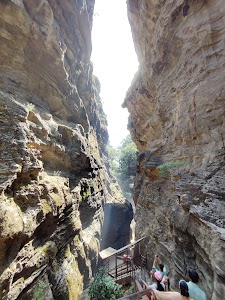
Cave Shrine – I know JataShankar Mahadev is a revered cave shrine nestled in the serene hills of Pachmarhi, Madhya Pradesh, India. It is primarily dedicated to Lord Shiva and is renowned for its unique natural rock formations that resemble divine imagery.
Spiritual or cultural significance
Sacred Sanctuary – I understand this site holds deep religious importance for devotees. Many believe the intricate rock formations within the cave resemble Lord Shiva's matted hair, or 'jata'. A natural Shiva Lingam, continuously bathed by a flowing underground spring, further enhances its sanctity, making it a significant pilgrimage destination.
What to expect
Peaceful Pilgrimage – I find that visitors can expect a spiritual journey into a naturally formed cave, which is typically cool and dimly lit. The atmosphere inside is often filled with devotion, and the gentle sound of the natural spring adds to the tranquil ambiance. It offers a unique blend of religious reverence and natural wonder.
Visitor etiquette
Respectful Conduct – I advise visitors to wear modest clothing as a sign of respect for this sacred site. Maintaining silence or speaking softly inside the cave and its immediate surroundings is appreciated. Photography may be restricted in certain areas, especially near the main shrine.
Best time to go
Cooler Months – I suggest visiting during the cooler months, typically from October to March. The weather during this period is most pleasant for exploring the cave and its natural surroundings. The post-monsoon season also offers lush greenery and vibrant natural beauty.
Practical info
Moderate Trek – I note that reaching the cave involves descending several steps and a short walk through a natural, sometimes uneven, setting. This requires a moderate level of physical fitness. Basic facilities, such as small stalls offering refreshments and items for worship, are generally available nearby.
Good to know
Natural Springs – I think it's interesting to know that the cave is fed by a natural spring. This spring is believed to originate from the Satpura Range, contributing to the mystique and natural beauty of the shrine, and keeping the cave cool even during warmer months.