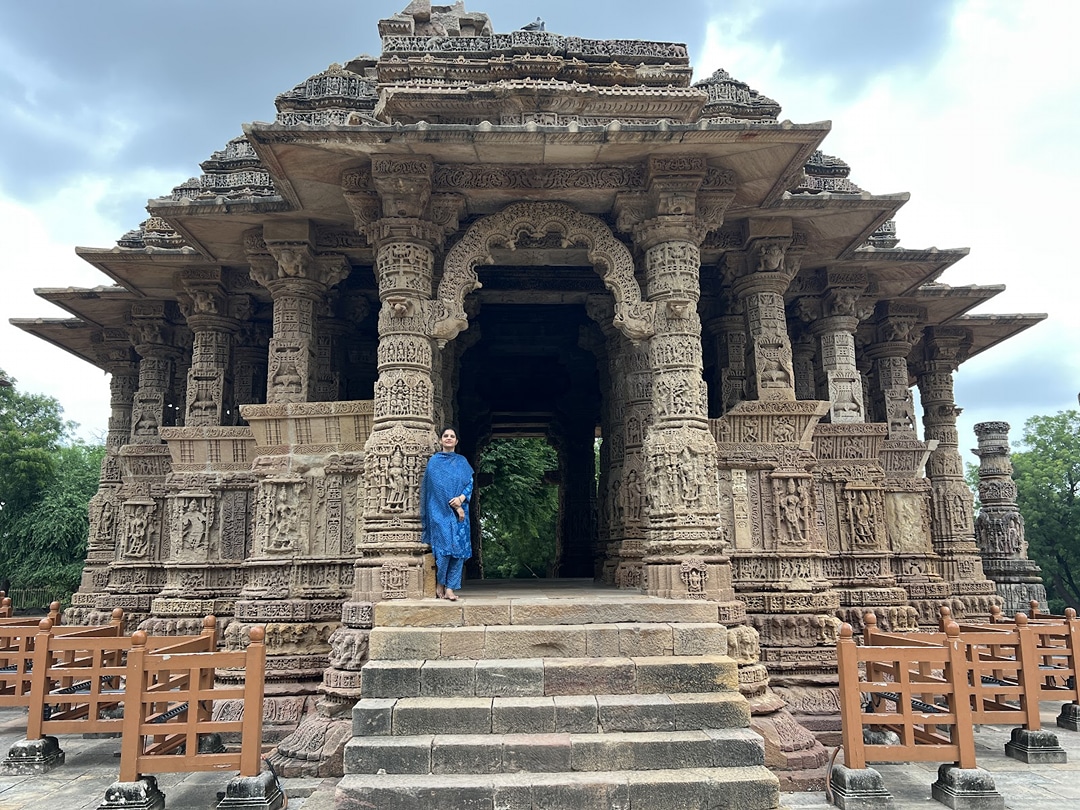
Ancient Complex – This is an exquisite ancient temple complex dedicated to the Sun God Surya, accompanied by a magnificent stepwell (waav). It stands as a testament to Solanki architecture from the 11th century. I find it to be a truly remarkable historical and spiritual site.
Why people come here
Architectural Marvel – People primarily visit to admire the breathtaking intricate carvings, grand scale, and sophisticated design of both the temple and the stepwell. It's a place where history buffs, architecture enthusiasts, and those seeking spiritual solace converge.
Historical and Spiritual Significance
Rich Heritage – The Surya Mandir was built by King Bhima I of the Chaulukya dynasty around 1026-1027 CE. It's dedicated to the Sun God Surya, reflecting the profound spiritual connection ancient civilizations had with celestial bodies. The complex, including its large stepwell, was not only a place of worship but also a hub for water storage and social gatherings, deeply integrated into the community's life.
Key architectural highlights
Intricate Design – You'll discover three main components: the Gudhamandapa (shrine hall), the Sabhamandapa (assembly hall), and the Kunda (a large stepped tank). The entire structure is adorned with detailed sculptures depicting deities, celestial beings, and scenes from ancient epics. The Kunda, also known as Rama Kund, is particularly striking with its numerous small shrines and perfectly symmetrical steps leading to the water.
What to expect
Serene Grandeur – Expect a journey back in time as you explore the ruins and marvel at the craftsmanship. The atmosphere is generally calm and reflective, allowing for peaceful contemplation amidst the ancient stones. It's a place that invites you to walk around, observe the details, and imagine life centuries ago.
Practical info
Visitor Essentials – The complex is typically open during daylight hours. I'd recommend allocating about 1 to 2 hours to comfortably explore the temple and the stepwell. Since it's a historical and religious site, wearing respectful attire is advisable. Be prepared for a fair amount of walking, including steps, especially if you plan to descend into the Kunda.
Good to know
Optimal Visit – The best time to visit is generally during the cooler months, from October to March, to avoid the intense heat of Gujarat. Photography is usually permitted, so you can capture the stunning architectural details.