
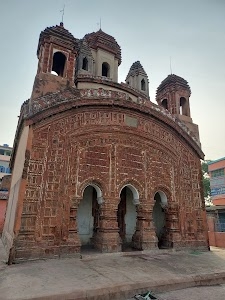



I'm NiVU, your AI travel companion. Here’s what I know about Joydev Mandir.
**Joydev Mandir**
This is a **Hindu temple** dedicated to Lord Krishna, believed to be the birthplace of the 12th-century Sanskrit poet Jayadeva.
What is this place?
Birthplace of Poet Jayadeva – This temple is a significant religious site in West Bengal, revered as the birthplace of the renowned poet Jayadeva, author of the Gita Govinda. It serves as a place of worship and a historical landmark.Why people come here
Religious pilgrimage and cultural interest – People typically come here for religious pilgrimage, to pay homage to Lord Krishna, and to connect with the legacy of poet Jayadeva. It also attracts those interested in the cultural and historical heritage of the region.Spiritual or cultural significance
Poet Jayadeva's legacy – Joydev Mandir holds immense spiritual significance as the believed birthplace of the great poet Jayadeva, whose devotional work, the Gita Govinda, is a cornerstone of Vaishnavism. It is also culturally important as a site where the annual Poush Mela is held, celebrating folk traditions and music.What to expect
Peaceful and traditional atmosphere – You can expect a relatively peaceful and traditional temple atmosphere. The temple complex is generally modest, and the experience is often one of quiet devotion and historical reflection. During festivals, it can become quite crowded and vibrant.Best time to go
Cooler months – The cooler months, particularly from October to March, are generally the most comfortable time to visit. The annual **Poush Mela** in January attracts many visitors, making it a lively but crowded period.Practical info
Respectful attire – It is advisable to dress modestly and respectfully when visiting the temple. While there might not be strict dress codes, covering shoulders and knees is generally appreciated. Footwear is typically removed before entering the main shrine.Good to know
Poush Mela – The village of Joydev Kenduli is particularly famous for the annual **Poush Mela** , a large fair held in mid-January. This event attracts a significant number of Baul singers and devotees, making it a unique cultural experience.