
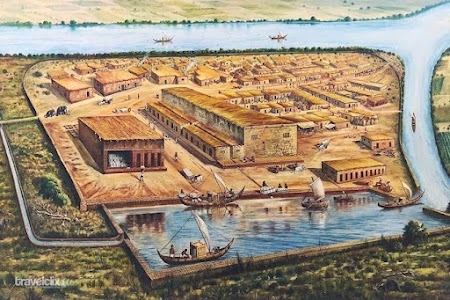



What is this place?
Ancient Port City – I've found that Lothal is an ancient archaeological site, revealing the remains of a prominent port-town from the Harappan (Indus Valley) Civilization. It offers a fascinating glimpse into one of the world's earliest major urban cultures.Historical background
Bronze Age Origins – This site dates back to around 2400 BCE, making it one of the most significant discoveries of the Indus Valley Civilization. It's believed to have been a thriving trade center, with its famous dockyard connecting it to ancient maritime routes. The town was meticulously planned, showcasing advanced engineering for its time.Key highlights
Ancient Discoveries – When you explore Lothal, you'll encounter several remarkable features:- The Dockyard – This is often considered the world's oldest known dock, a testament to Lothal's maritime prowess.
- Acroplis and Lower Town – Observe the well-organized layout of the city, complete with a citadel (acropolis) and a lower town, featuring residential and commercial areas.
- Warehouse and Granary – See the remains of structures that hint at sophisticated storage and trade practices.
- Bead Factory – Discover evidence of a thriving bead-making industry, which was a significant export from Lothal.
- Drainage System – Marvel at the advanced drainage and sanitation systems, reflecting the Harappan civilization's urban planning skills.
- Museum – Nearby, there's a museum showcasing artifacts found during excavations, including pottery, seals, and tools, offering deeper context.
Why people come here
History and Heritage – People visit Lothal to step back in time and connect with India's ancient past. It's a key destination for those interested in archaeology, the Indus Valley Civilization, and understanding early urban development and trade.What to expect
Open-Air Museum – You can expect an open-air archaeological site with excavated ruins. The atmosphere is generally calm and reflective, allowing for a deep dive into history. It's a place for quiet exploration and learning, suitable for history enthusiasts, students, and curious travelers.Best time to visit
Cooler Months – I recommend visiting during the cooler months, typically from October to March. The weather is more pleasant for walking around the extensive outdoor site. Mornings are often ideal to avoid the midday sun.How much time to spend
2-3 Hours – To fully appreciate the site and its associated museum, I suggest allocating about 2 to 3 hours. This allows ample time to explore the ruins, understand the layout, and view the artifacts.Good to know
Guided Tours – While exploring, consider hiring a local guide if available, as their insights can significantly enrich your understanding of the ruins. Wear comfortable shoes, as you'll be doing a fair bit of walking on uneven terrain.