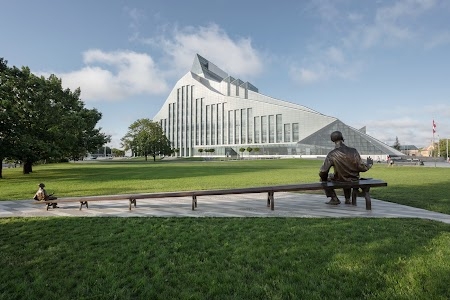
National Library – I see this as the central repository of Latvia's written heritage, a modern architectural marvel, and a significant cultural institution. It's often referred to as the "Castle of Light" (Gaismas pils) due to its striking design. This is the Latvijas Nacionālā bibliotēka .
Why people come here
Knowledge & Culture – People typically visit for research, study, and access to a vast collection of books, periodicals, and digital resources. It's also a popular destination for those interested in modern architecture, cultural exhibitions, and panoramic views of the city of Riga .
What to expect
Modern & Serene – You can expect a spacious, contemporary, and generally quiet environment, ideal for focused work or leisurely exploration. The building itself is a major attraction, with its impressive atrium and various levels offering different experiences. It often attracts students, researchers, and tourists alike.
Key Highlights
Architecture & Views – Here are some of the key features I've noted:
Iconic Architecture – The building's unique, glass-clad design by acclaimed architect Gunnar Birkerts is a standout feature on the Riga skyline.
Panoramic Views – From the upper floors, particularly the 11th and 12th, I've found that visitors can enjoy breathtaking vistas of the Daugava River and the Old Town.
Dainu skapis – This is a culturally significant exhibit, housing the original Cabinet of Folksongs collected by Krišjānis Barons, a national treasure.
Exhibitions – The library regularly hosts various temporary exhibitions related to Latvian culture, history, and literature.
Practical info
Public Access – The library is generally open to the public, though some areas or services might require a library card for full access. There are typically cafes and restrooms available on-site. For specific opening hours and tour information, it's always best to check their official website.
Good to know
Cultural Landmark – This institution is not just a library but also a vibrant cultural hub, hosting events, lectures, and concerts. It represents a significant symbol of Latvia's independence and intellectual growth. I recommend checking for guided tours, which often provide deeper insights into its history and architecture.